Aquarium-safe silicone is a sealant whose manufacturer states it is safe for fish and other aquatic life once it has fully cured, and that is made to bond the glass panels of a tank that holds water. ASI 509 aquarium silicone sealant is one example: American Sealants lists it for building and repairing freshwater and saltwater aquariums and terrariums, and tells you to wait for full cure, 7 days, before the tank goes back into use.
Products in this guide
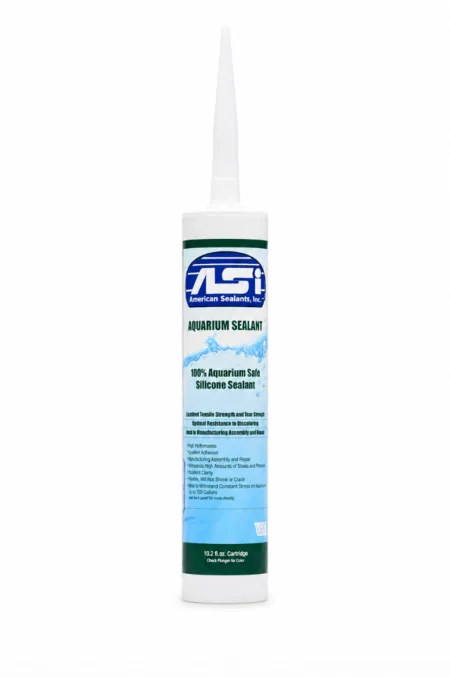
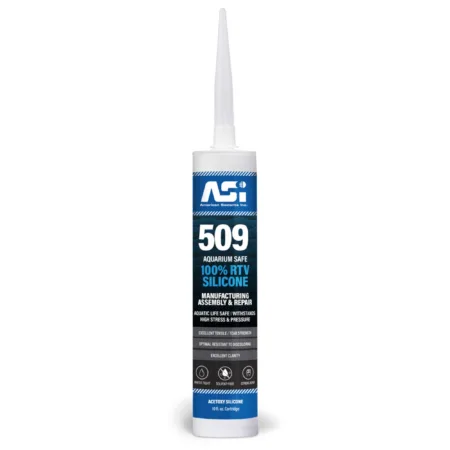
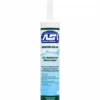 ASI 509 Aquarium Silicone Sealant, Clear, 10.2 oz Cartridge Original price was: $16.90.$12.99Current price is: $12.99.
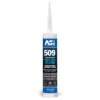 ASI 509 Aquarium Silicone Sealant, Black, 10.2 oz Cartridge Original price was: $15.90.$12.99Current price is: $12.99.
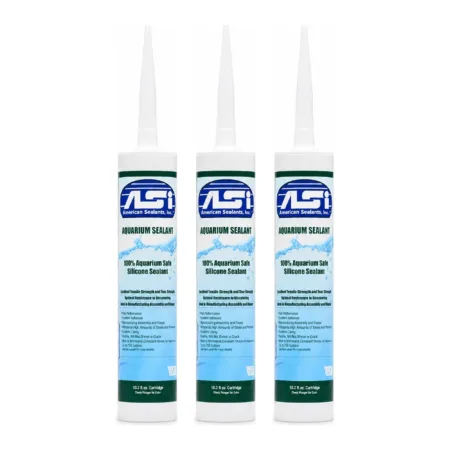
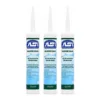 ASI 509 Aquarium Silicone Sealant, Clear, 10.2 oz Cartridge (Pack of 3) Original price was: $38.97.$35.00Current price is: $35.00.
The short version: buy a silicone sold specifically for aquariums, let it cure all the way, and keep general-purpose caulk out of the tank unless its maker says otherwise.
What makes a silicone “aquarium safe”?
The practical test is what the manufacturer says the product is made for. Three things matter:
- The maker states it is aquarium safe. ASI describes cured 509 as aquatic life safe and lists aquarium manufacturing, aquarium repair, glass viewing panels and sealing or bonding aquarium filters among its uses.
- It is made to bond glass. A tank seam is a structural joint. ASI 509 offers primerless adhesion to glass, so the bead bonds to clean glass without a separate primer coat.
- It is fully cured before water or animals go in. Even a sealant made for tanks is only described as safe once cured. ASI’s instruction for 509 is to wait for full cure, 7 days, before using the aquarium.
General-purpose silicones are formulated for other jobs. ASI’s own 502, for example, is a mold- and mildew-resistant sealant whose listed uses include HVAC, appliances, walk-in freezers and kitchen-and-bath seals, not aquariums; for tanks, ASI sells 509. Apply the same logic to any caulk on the shelf: if the label does not say aquarium safe, it does not go in the tank. Our acetoxy vs neutral cure silicone guide explains how the ASI family differs.
What to check on the label
| Check | Why it matters | ASI 509 (per ASI’s data sheet) |
|---|---|---|
| Stated safe for aquatic life when cured | The maker’s own claim is the clearest signal | Yes, for freshwater and saltwater aquariums |
| Adhesion to glass | The seams carry the water load | Primerless adhesion to glass; most acrylics also listed |
| Long-term water exposure | The bead sits under water for years | 203 psi lap shear after 300 days of water immersion, cohesive failure (ASTM C-961) |
| Cure before use | Uncured sealant is not described as safe | About 24 hours per 1/8″ bead; full cure, 7 days, before use |
| Service temperature | Heated and chilled systems | -50°F to 400°F |
“Cohesive failure” in that water-immersion test means the rubber itself tore before it let go of the surface it was bonded to. ASI also lists 509 under FDA 21 CFR 177.2600, the FDA regulation for rubber articles intended for repeated use, which some builders look for as an extra check.
Fish tanks, reef tanks and terrariums
ASI lists 509 for both saltwater and freshwater aquariums, so the same cartridge covers a community tank, a planted tank or a reef system. It is also listed for terrarium manufacturing and repair, which is why keepers looking for reptile-safe or amphibian-safe silicone end up at the same product. The rules do not change: let it cure fully. While it cures it gives off an acetic acid (vinegar) odor, so ASI says to work outdoors or in a well-ventilated area, and we suggest airing the enclosure out before animals go back in.
Check your materials before you start. ASI lists glass, most acrylics, aluminum, steel, porcelain, PVC and most woods as compatible, but only some plastics, so try a small test bead on anything unusual. Do not use it on porous surfaces such as concrete, mortar or brick, and plan around the fact that the cured rubber cannot be painted.
Resealing a leaking tank: the short version
- Drain the tank, move livestock to a holding container and let the glass dry.
- Cut and scrape out the old bead along the leaking seam so the new silicone bonds to clean, bare glass.
- Run a continuous bead of ASI 509 with a caulking gun; ASI gives an application range of -35°F to 150°F.
- Tool the bead within about 10 minutes, before it skins over.
- Let it cure: about 24 hours per 1/8″ of bead, and 7 days before the tank is used. We suggest filling it with plain water first and checking for drips before fish go back in.
Our aquarium silicone cure time guide covers what slows the cure and how to get a clean, full result.
Clear or black, and how much to buy
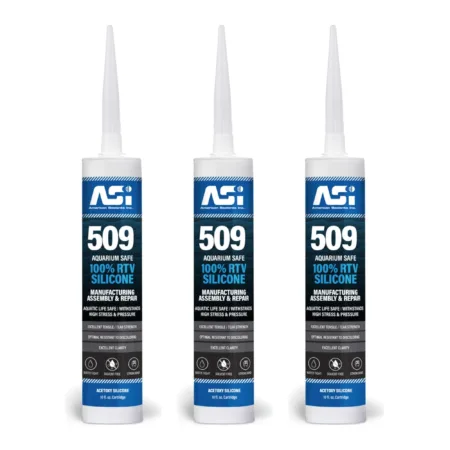
Both colors are the same 509 formula in a 10.2 oz cartridge. Choose ASI 509 in clear for seams that disappear into the glass, or ASI 509 in black for a framed look. If you are building more than one tank, resealing a rack of tanks or want a spare on the shelf, the clear 3-pack and black 3-pack ship three cartridges in one order. ASI gives 509 a 12-month shelf life from shipment when stored at 70°F and 50% relative humidity, so buy for the projects you have planned this year.
Frequently asked questions
Is any 100% silicone safe for an aquarium?
Not automatically. Use a sealant whose maker states it is safe for aquariums once cured, such as ASI 509; general-purpose silicones are formulated for other jobs, and ASI does not list its general-purpose 502 for tanks.
Can I use aquarium silicone in a reptile terrarium?
Yes, when the maker lists it for that. ASI lists terrarium manufacturing and repair among ASI 509’s uses; let it cure fully and air the enclosure out before animals go back in.
Is ASI 509 safe for saltwater reef tanks?
ASI lists ASI 509 for both saltwater and freshwater aquariums.
How long until I can add fish?
ASI says to wait for full cure, 7 days, before using the aquarium. A 1/8″ bead cures in about 24 hours, but that is not full strength.
Do I need a caulking gun?
Yes. ASI 509 comes in a 10.2 oz cartridge that goes in a standard caulking gun.
Bottom line
For a fish tank or terrarium, choose a silicone its maker sells for that job, bond it to clean glass and give it the full cure before water or animals go in. ASI 509 checks those boxes: it is listed for freshwater and saltwater aquariums and for terrariums, bonds to glass without a primer, and comes in clear and black.
Products in this guide
-
ASI
ASI 509 Aquarium Silicone Sealant, Clear, 10.2 oz Cartridge
Original price was: $16.90.$12.99Current price is: $12.99.In stock — ships in 1–3 days
- Aquarium safe
-
ASI
ASI 509 Aquarium Silicone Sealant, Black, 10.2 oz Cartridge
Original price was: $15.90.$12.99Current price is: $12.99.In stock — ships in 1–3 days
- Aquarium safe
-
ASI
ASI 509 Aquarium Silicone Sealant, Clear, 10.2 oz Cartridge (Pack of 3)
Original price was: $38.97.$35.00Current price is: $35.00.$11.67 / cartridge
In stock — ships in 1–3 days
- Aquarium safe
-
ASI
ASI 509 Aquarium Silicone Sealant, Black, 10.2 oz Cartridge (Pack of 3)
Original price was: $38.97.$35.00Current price is: $35.00.$11.67 / cartridge
In stock — ships in 1–3 days
- Aquarium safe