Acetoxy and neutral cure silicones both cure from moisture in the air into flexible silicone rubber; the difference is what they release while curing. Acetoxy silicone gives off acetic acid (the vinegar smell), skins fast and bonds well to glass, metal, tile and porcelain. Neutral cure silicone releases a non-acidic byproduct, has low odor, sticks to a broader range of materials and is non-corrosive to most metals. ASI 502 is an acetoxy 100% RTV silicone; ASI 388 is the neutral cure, electronic grade counterpart.
Products in this guide
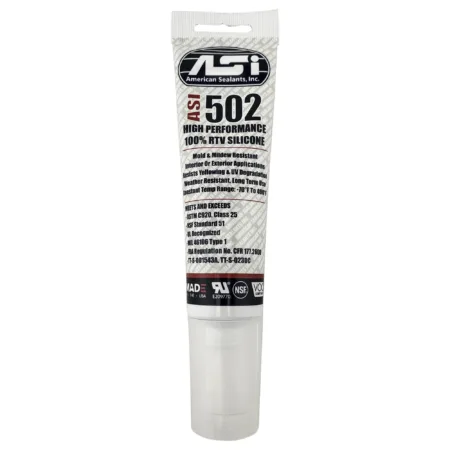
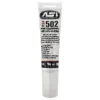 ASI 502 100% RTV Silicone Sealant, Clear, 2.8 oz Squeeze Tube Original price was: $10.90.$7.30Current price is: $7.30.
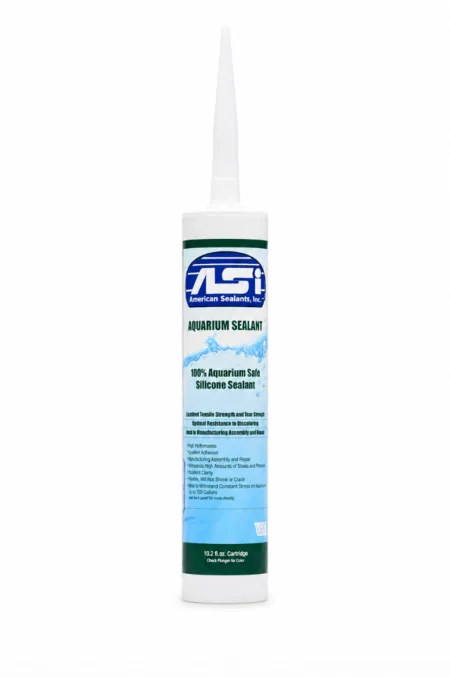
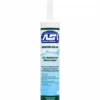 ASI 509 Aquarium Silicone Sealant, Clear, 10.2 oz Cartridge Original price was: $16.90.$12.99Current price is: $12.99.
Acetoxy vs neutral cure: side by side
| Factor | Acetoxy cure (ASI 502) | Neutral cure (ASI 388) |
|---|---|---|
| Released while curing | Acetic acid, vinegar odor | Oxime (MEKO), low odor |
| Skin formation (70°F, 50% RH) | 10 minutes | 20 minutes |
| Cure | 24 hours per 1/8″ bead; full strength at 7 days | 24 hours per 1/8″ bead; full strength at 7 days |
| Metals | Corrosive to sensitive metals when confined | Non-corrosive to most metals; can discolor copper |
| Concrete, mortar, brick | Do not use (ASI) | Adhesion to concrete listed by ASI |
| Food contact | NSF 51 and FDA 21 CFR 177.2600 listed for ASI 502 | Not food grade |
| Service temperature | -70°F to 400°F; intermittent 450°F | -70°F to 400°F; intermittent 450°F |
Data from ASI’s technical data sheets for ASI 502 and ASI 388 and ASI’s general RTV silicone properties chart.
What “acetoxy” means
Acetoxy refers to the cure system. When an acetoxy silicone meets humidity, it cross-links into rubber and releases acetic acid, the same acid that gives vinegar its smell. That chemistry is fast and bonds strongly to non-porous surfaces, which is why acetoxy silicones are the traditional choice for glass, tile, metal and sanitary seals. The trade-off is the acid: in a confined space it can attack sensitive metals, and ASI does not recommend acetoxy silicone for long-term adhesion to concrete. The smell fades as the silicone cures, but ASI’s safety data sheet still says to use it outdoors or in a well-ventilated area.
When ASI 502 (acetoxy) is the right choice
ASI 502 is a 100% acetoxy RTV silicone built as an industrial and construction sealant and adhesive. ASI lists HVAC and ductwork, appliance manufacturing, refrigeration units, walk-in freezers, trailer sealing, formed-in-place gaskets, sheet metal, countertops, kitchen and bath, sanitary seals, plumbing and coaxial cable connectors among its common uses. What it brings:
- ASTM C920 Class 25 (25% joint movement), plus TT-S-01543A, TT-S-00230-C and MIL 46106B Type 1
- Listed to NSF Standard 51 and FDA 21 CFR 177.2600; ASI states it is acceptable as a sealant on surfaces with incidental food contact
- Mold and mildew resistant, UV and weather resistant, non-slump for vertical and overhead joints
- No solvents, so it does not shrink or crack as it cures
- UL Recognized; 25 Shore A; 500% elongation
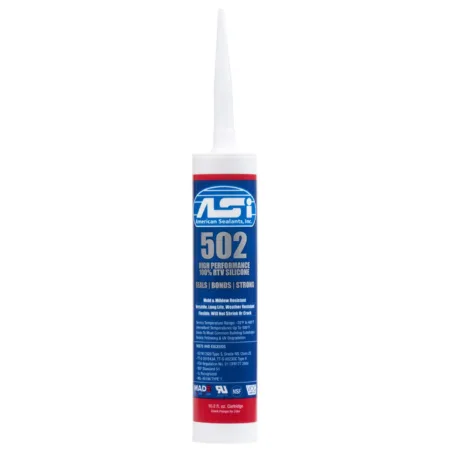
Pick it for glass, tile, porcelain, ceramic, marble, aluminum, steel, PVC, most woods, most fiberglass and solid-surface countertops. It comes in an ASI 502 clear 2.8 oz squeeze tube for small repairs and an ASI 502 clear 10.2 oz cartridge for a caulking gun, plus white and black tubes. For crews that go through several, the clear tube also comes in a 3-pack, 6-pack and 12-pack.
When neutral cure (ASI 388) is the right choice
- Electronics and electrical work: circuit board protection, lead wire entries, encapsulating and sealing enclosures. ASI 388 is UL Recognized with 500 V/mil dielectric strength.
- Confined spaces with metal where acid vapor would be trapped against sensitive metal.
- Porous surfaces where acetoxy is not recommended, and anywhere the odor is a problem.
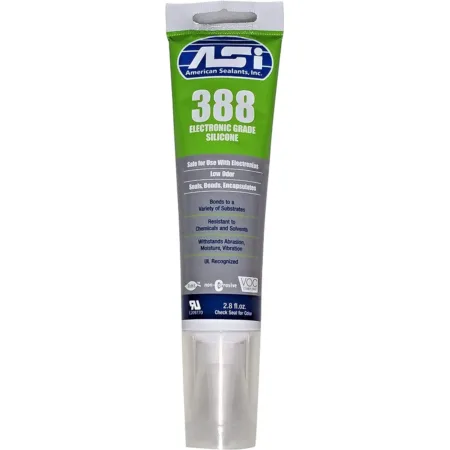
One caution: neutral cure is not automatically copper-safe. ASI states that 388 can discolor copper around the applied or confined area. The ASI 388 Electronic Grade RTV 2.8 oz tube is the size most people use for electronics; our neutral cure silicone for electronics guide covers application.
Can you use acetoxy silicone on plastic?
Sometimes. ASI lists only “some plastics” for both 502 and 388, and recommends testing every substrate before use. PVC and fiberglass are on ASI’s list for 502. For any other plastic, run a test bead on a scrap piece, let it cure for the full 7 days ASI recommends before checking adhesion, and peel it. If it lets go cleanly, choose a different product or a mechanical fastener.
What about aquariums?
Aquarium silicone is a special case. ASI 509 Aquarium Sealant is also an acetoxy RTV, but it is formulated for aquarium manufacturing and repair, cures to a rubber ASI describes as aquatic life safe, and offers primerless adhesion to glass. The key rule: ASI says to wait for full cure, 7 days, before using the aquarium. See the ASI 509 aquarium silicone sealant, clear. Do not substitute 502 in a tank; use the product made and tested for it. Our aquarium-safe silicone guide covers what to check on the label.
Application tips for either type
- Apply between -35°F and 150°F to clean, dry surfaces free of old sealant, oil and dust.
- Tool the bead before the skin forms: about 10 minutes for ASI 502, about 20 minutes for ASI 388.
- Give it humidity and air. Cold temperatures and low humidity slow the cure, and a bead sealed inside a closed box cures slowly.
- Plan for 24 hours per 1/8 inch of thickness, and 7 days before you load the joint or test adhesion.
- Neither is paintable. If the joint must be painted, choose a paintable sealant instead.
Frequently asked questions
What does acetoxy silicone mean?
It is a silicone whose cure releases acetic acid. It skins fast and bonds well to glass, metal and tile, but the acid can corrode sensitive metals in a confined space.
Is ASI 502 food safe?
ASI lists ASI 502 to NSF Standard 51 and FDA 21 CFR 177.2600 and states it is acceptable as a sealant on surfaces with incidental food contact.
How long does acetoxy silicone take to cure?
ASI 502 skins in about 10 minutes and cures about 1/8 inch per 24 hours at 70°F and 50% RH; strength keeps building for 7 days.
Which is better, acetoxy or neutral cure?
Neither in general. Use acetoxy for glass, tile, metal and food-contact sealing; use neutral cure for electronics, sensitive metals in confined spaces and porous surfaces.
Bottom line
Choose acetoxy ASI 502 for fast, strong seals on glass, tile, metal and food-contact surfaces, with ventilation while it cures. Choose neutral cure ASI 388 for electronics, confined metal and low-odor work, and test it on copper. Either way, allow 7 days for full strength. For RTV basics, read what RTV silicone means, or compare everything on our sealants and silicones page.
Products in this guide
-
ASI
ASI 502 100% RTV Silicone Sealant, Clear, 2.8 oz Squeeze Tube
Original price was: $10.90.$7.30Current price is: $7.30.In stock — ships in 1–3 days
Add to cart -
ASI
ASI 502 100% RTV Silicone Sealant, Clear, 10.2 oz Cartridge
Original price was: $16.90.$12.99Current price is: $12.99.Out of stock
Read more -
ASI
ASI 388 Electronic Grade RTV Silicone, Clear, 2.8 oz Squeeze Tube
Original price was: $13.90.$11.30Current price is: $11.30.Out of stock
- Dielectric
-
ASI
ASI 509 Aquarium Silicone Sealant, Clear, 10.2 oz Cartridge
Original price was: $16.90.$12.99Current price is: $12.99.In stock — ships in 1–3 days
- Aquarium safe