RTV stands for room-temperature vulcanizing: an RTV silicone cures into rubber at ordinary room temperature, with no oven or heat lamp. One-part RTV silicones such as ASI 502, ASI 388 and ASI 509 cure by reacting with moisture in the air, first forming a skin in minutes, then curing through about 1/8 inch per day, and reaching full strength after about a week. Once cured, they are flexible, waterproof and rated from -70°F (or -50°F for 509) to 400°F.
Products in this guide
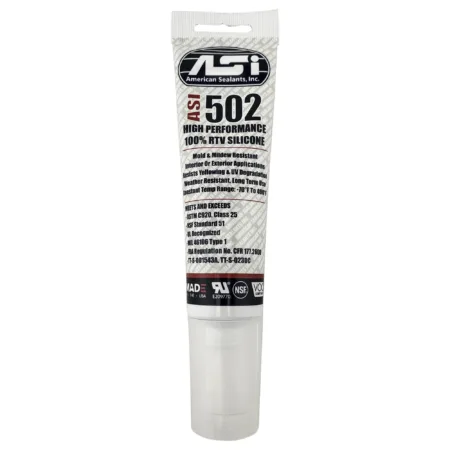
 ASI 502 100% RTV Silicone Sealant, Clear, 2.8 oz Squeeze Tube Original price was: $10.90.$7.30Current price is: $7.30.
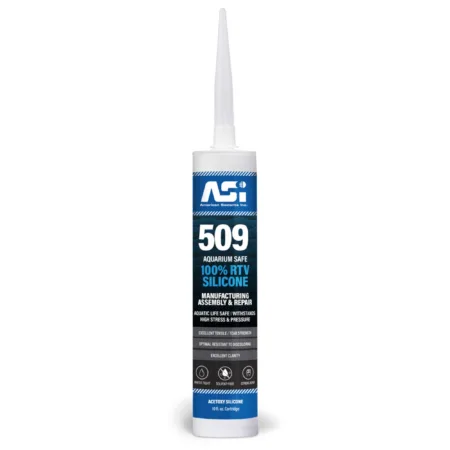
 ASI 509 Aquarium Silicone Sealant, Clear, 10.2 oz Cartridge Original price was: $16.90.$12.99Current price is: $12.99.
 ASI 509 Aquarium Silicone Sealant, Black, 10.2 oz Cartridge Original price was: $15.90.$12.99Current price is: $12.99.
RTV, explained in plain terms
“Vulcanizing” is the old rubber-industry word for cross-linking a soft material into an elastic one. Traditional rubber needs heat to vulcanize. An RTV silicone does it at room temperature: as the bead absorbs humidity from the air, its silicone chains link up and the paste turns into solid, stretchy silicone rubber. ASI describes all of its RTV silicones as one-part, room temperature vulcanizing products. Two-part RTV systems also exist that cure when two components are mixed; they are commonly used for molds and potting, and this guide covers the one-part sealants.
How long does RTV silicone take to cure?
Think of it in three stages, using ASI’s numbers at 70°F and 50% relative humidity:
- Skin time: the surface stops being tacky in about 10 minutes for ASI 502 and ASI 509 and about 20 minutes for ASI 388. Tool the bead before this point.
- Cure through: about 24 hours for a 1/8-inch bead. Because moisture reaches the silicone from the outside, thick beads and deep joints take longer.
- Full strength: strength keeps building for 7 days, and ASI recommends testing adhesion on day 7. For ASI 509 aquarium sealant, ASI says to wait for the full 7-day cure before using the aquarium.
Cold temperatures and low humidity slow every stage, which is why winter jobs in a dry, heated shop take longer than the data sheet suggests. ASI’s suggested application range is -35°F to 150°F.
Is RTV silicone waterproof?
Yes, once cured. ASI states that ASI 502 creates a waterproof seal and resists UV and weathering for indoor and outdoor use. ASI 509 is used to build and repair saltwater and freshwater aquariums, and in ASI’s water immersion study it still showed 203 psi lap shear strength after 300 days in water, with cohesive failure (the silicone tore before the bond let go). An uncured bead is not waterproof, so keep water off it until it has cured.
Is RTV silicone heat resistant, conductive or paintable?
- Heat: ASI 502 and ASI 388 are rated for continuous service from -70°F to 400°F and intermittent exposure up to 450°F; ASI 509 is rated from -50°F to 400°F.
- Electricity: cured silicone is an insulator. ASI 388 lists a dielectric strength of 500 V/mil and a volume resistivity of 3 x 10^15.
- Paint: ASI’s silicones are not paintable. Paint will not stick to the cured rubber, so plan joints accordingly.
- Porous masonry: ASI says not to use 502 or 509 on porous surfaces such as concrete, mortar or brick.
The ASI RTV silicones we carry
| Product | Cure type | Skin time | Hardness / tensile | Typical use |
|---|---|---|---|---|
| ASI 502 100% RTV | Acetoxy | 10 min | 25 Shore A / 264 psi | HVAC, appliances, freezers, kitchen and bath, sanitary seals; NSF 51 listed |
| ASI 388 Electronic Grade | Neutral (oxime) | 20 min | 30 Shore A / 300 psi | Circuit board protection, encapsulating, wire entries; UL Recognized |
| ASI 509 Aquarium Sealant | Acetoxy | 10 min | 45 Shore A / 520 psi | Building and repairing glass aquariums and terrariums |
Values from ASI’s technical data sheets. The two cure types behave differently around metals and porous surfaces; our acetoxy vs neutral cure silicone guide explains when each one fits.
ASI 502: the general-purpose workhorse
ASI 502 is a 100% acetoxy silicone that meets ASTM C920 Class 25, MIL 46106B Type 1 and other specifications, and ASI states it is acceptable as a sealant on surfaces with incidental food contact (NSF 51). It is non-slump, so it stays put on vertical and overhead joints. Start with the ASI 502 clear 2.8 oz squeeze tube; white, black and a 10.2 oz cartridge are also available, and the clear tube is sold in a 3-pack, 6-pack and 12-pack as well.
ASI 388: for electronics
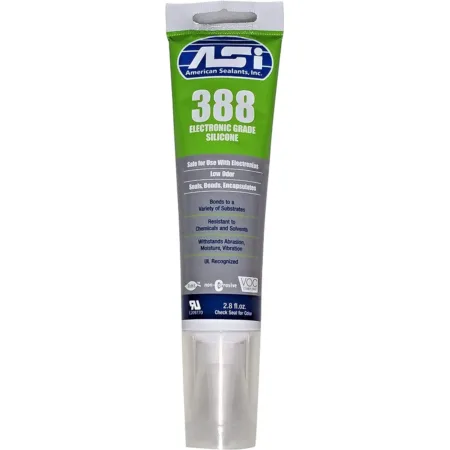
ASI 388 is a neutral cure silicone that does not release acetic acid while curing, which suits circuit boards and electrical enclosures. ASI notes it can discolor copper, so test first. See the ASI 388 electronic grade RTV 2.8 oz tube and our guide to neutral cure silicone for electronics.
ASI 509: for aquariums
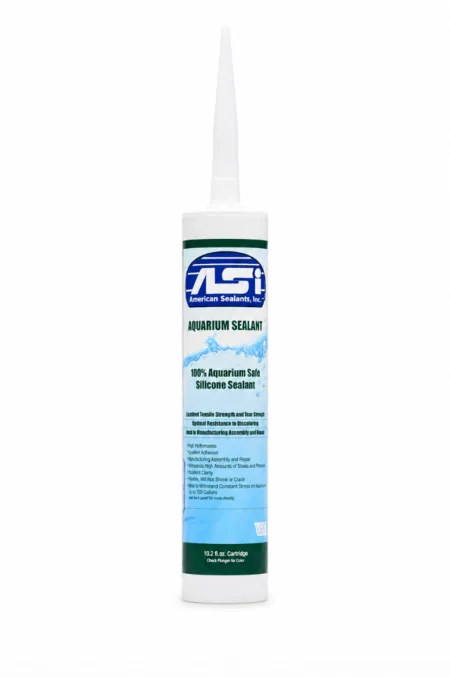
ASI 509 is formulated for aquarium manufacturing and repair, with primerless adhesion to glass and a cure ASI describes as aquatic life safe. It comes in a clear 10.2 oz cartridge and a black 10.2 oz cartridge, so you can match the look of your tank. Clean the glass with isopropyl alcohol or acetone as ASI directs, never with petroleum-based solvents, and wait the full 7 days before adding water and livestock. Before you seal a tank, our aquarium-safe silicone guide lists what to check.
Shelf life and storage
ASI rates these silicones for 12 months from shipment when stored at 70°F and 50% RH, and warns not to store them at elevated temperatures. Buy the size you will use within the year.
Safety
Acetoxy silicones (502 and 509) give off an acetic acid odor while curing, and ASI’s safety data sheets say to use them outdoors or in a well-ventilated area. ASI 388 releases methyl ethyl ketoxime while curing and carries additional warnings on its SDS. Read the label and SDS before use; ours are on the technical documents page.
Frequently asked questions
What does RTV stand for?
Room-temperature vulcanizing. The silicone cures into rubber at room temperature by reacting with moisture in the air.
How long does RTV silicone take to cure?
ASI’s figure is 24 hours per 1/8-inch bead at 70°F and 50% RH, with full strength at 7 days. Cold, dry air slows it down.
Is RTV silicone waterproof?
Yes, once cured. ASI 502 creates a waterproof seal, and ASI 509 is used in saltwater and freshwater aquariums.
What types of ASI silicone sealant are there?
ASI makes acetoxy silicones such as 502 and 509 and neutral cure silicones such as 388, plus other specialty grades. We stock 502, 388 and 509.
Bottom line
RTV silicone cures at room temperature from air moisture: skin in minutes, through-cure at about 1/8 inch per day, full strength in 7 days. Choose ASI 502 for general sealing, ASI 388 for electronics and ASI 509 for aquariums. All of them are on our ASI page and our sealants and silicones page.
Products in this guide
-
ASI
ASI 502 100% RTV Silicone Sealant, Clear, 2.8 oz Squeeze Tube
Original price was: $10.90.$7.30Current price is: $7.30.In stock — ships in 1–3 days
Add to cart -
ASI
ASI 388 Electronic Grade RTV Silicone, Clear, 2.8 oz Squeeze Tube
Original price was: $13.90.$11.30Current price is: $11.30.Out of stock
- Dielectric
-
ASI
ASI 509 Aquarium Silicone Sealant, Clear, 10.2 oz Cartridge
Original price was: $16.90.$12.99Current price is: $12.99.In stock — ships in 1–3 days
- Aquarium safe
-
ASI
ASI 509 Aquarium Silicone Sealant, Black, 10.2 oz Cartridge
Original price was: $15.90.$12.99Current price is: $12.99.In stock — ships in 1–3 days
- Aquarium safe