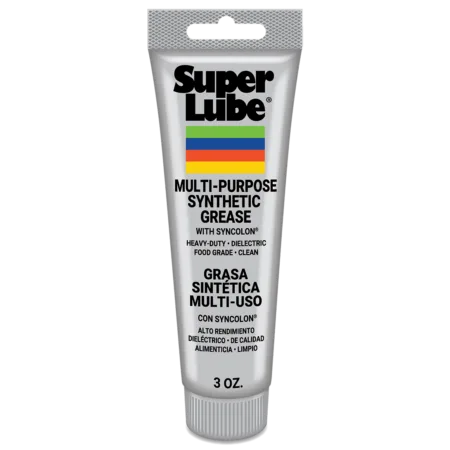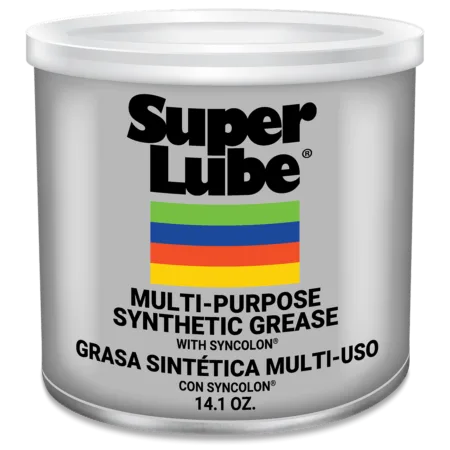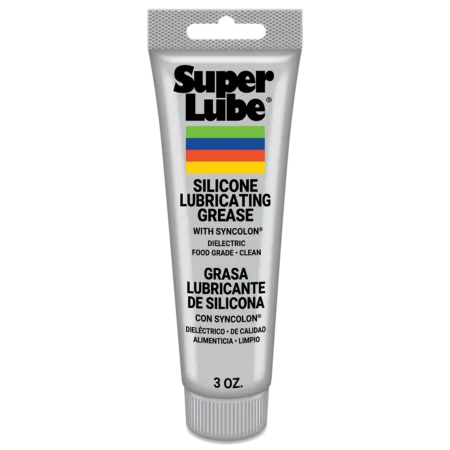
Super Lube grease is a synthetic, multi-purpose grease made by Kano Laboratories that combines synthetic base fluids with Syncolon, Super Lube’s name for its PTFE micro powders. It is NSF H1 registered for incidental food contact, NLGI grade 2, rated from -45°F to 450°F (-43°C to 232°C), and contains no silicone. People use it on bearings, slides, hinges, chains, O-rings, bicycles, guns, fishing reels, garage doors and food processing equipment.
Products in this guide
 Super Lube 21030 Multi-Purpose Synthetic Grease with Syncolon, 3 oz Tube Original price was: $13.99.$12.39Current price is: $12.39.
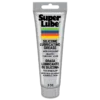 Super Lube 92003 Silicone Lubricating Grease with Syncolon, 3 oz Tube Original price was: $17.99.$15.59Current price is: $15.59.
Super Lube Multi-Purpose Synthetic Grease at a glance
| Property | Value (Super Lube TDS) |
|---|---|
| Base | Synthetic base fluids with Syncolon (PTFE) micro powders |
| Consistency | NLGI 2; NLGI GC-LB certified (grade 2 only) |
| Temperature range | -45°F to 450°F (-43°C to 232°C) |
| Dropping point | Above 550°F (287°C), ASTM D2265 |
| Dielectric strength | 643 V/mil (ASTM D149, 50 mil gap) |
| Color | Translucent white |
| Food contact | NSF H1 registered (#096790) |
| Other certifications | Kosher; Halal (AHF) |
| Shelf life | 5 years recommended, in the original container |
What is Syncolon?
Syncolon is Super Lube’s registered name for the PTFE (polytetrafluoroethylene) micro powders it blends into its greases and oils. Super Lube’s data sheets describe the grease as synthetic base fluids plus Syncolon micro powders, combining to protect against friction, wear, rust and corrosion. The same PTFE additive appears in other Super Lube products, including the multi-use synthetic oil and the silicone lubricating grease, which is why many of their part names end in “with Syncolon.”
Is Super Lube food grade?
Yes, the multi-purpose grease is NSF registered as an H1 lubricant, which means it is acceptable for incidental food contact, such as a lubricant on equipment where it might accidentally touch food. Super Lube’s data sheet gives registration #096790 and notes that it meets the former USDA H1 guidelines. H1 does not make a lubricant an ingredient; it covers incidental contact only. Super Lube also states the grease is safe in potable water. Other H1 products from Super Lube are grouped on our food grade grease page.
Is Super Lube silicone based?
The multi-purpose grease is not. Super Lube states that there is no silicone in its Multi-Purpose Grease with Syncolon and that it is safe to use in paint spraying and finishing operations, where silicone contamination is a problem. Super Lube does make a separate silicone line, including Super Lube 92003 silicone lubricating grease, the 91003 dielectric and vacuum grease and the 97008 brake grease. Those are silicone-based and are the usual pick for rubber and plastic parts; our 21030 vs 92003 comparison explains when to use which.
Is Super Lube conductive?
No. Super Lube lists the grease as dielectric, with a dielectric strength of 643 V/mil, and includes dielectric applications and battery protection among its uses. That does not make it a contact cleaner: clean and dry a connection before you protect it.
What Super Lube grease is used for
Super Lube’s data sheet lists a wide range of applications. The main groups:
- Bearings and motion: plain, anti-friction, ball, roller and wheel bearings; cams, slides, valves, conveyors and chains; generator, blower fan and electric fan motor bearings.
- Vehicles and trailers: hubs, axles, chassis, shocks, springs, seat regulators and tracks, fifth wheels, trailer bearings and caliper assemblies.
- Home and shop: garage doors, lawn mowers, snow blowers, sewing machines, faucets, pool pumps, linkages, hinges and locks.
- Sports and outdoors: bicycles, guns, fishing gear, motorcycles, hunting gear, campers, weight and fitness equipment.
- Food and industry: food processing equipment, O-ring lubrication, winches, pulleys and snaps.
Two popular uses have their own pages: 3D printer lubricant for rails and lead screws, and the food grade page above for mixers, slicers and other kitchen equipment.
Limits to know
- Pure oxygen: Super Lube states the grease is not for use in a pure oxygen environment.
- Seals and elastomers: check Super Lube’s compatibility chart and the seal maker’s recommendation before using it on silicone rubber or unusual elastomers.
- Mixing greases: Super Lube says it is compatible with most other greases, but cleaning out the old grease is still good practice when you switch.
- Heavy-duty grades: the sizes we stock are NLGI 2. Super Lube also makes softer grades (NLGI 1, 0, 00 and 000), which we do not carry.
Sizes: same grease, different packages
Every size of the multi-purpose grease is the same NLGI 2 formula; only the package changes:
- 21010, ½ oz tube: a drawer or tool bag size.
- 21030, 3 oz tube: the most common size for home, hobby and repair work. See the Super Lube 21030 3 oz tube.
- 21036, 3 oz cartridge, and 41150, 14.1 oz cartridge: for grease guns.
- 41160, 14.1 oz canister: for repacking bearings, gearboxes and larger jobs by hand or spatula. See the Super Lube 41160 14.1 oz canister.
All sizes are on our Super Lube page.
Frequently asked questions
What is Super Lube grease made of?
Synthetic base fluids blended with Syncolon, Super Lube’s PTFE micro powder. It contains no silicone.
Is Super Lube food safe?
It is NSF H1 registered (#096790) for incidental food contact, the standard used for lubricants on food processing equipment.
Can Super Lube be used as dielectric grease?
Super Lube lists dielectric applications and battery protection among its uses, and the grease has a dielectric strength of 643 V/mil. For connectors and boots, the dedicated 91003 silicone dielectric grease is another option.
What temperature can Super Lube grease handle?
-45°F to 450°F (-43°C to 232°C), with a dropping point above 550°F (287°C).
Bottom line
Super Lube grease is a silicone-free, PTFE-fortified synthetic NLGI 2 grease with NSF H1 food-contact registration and a -45°F to 450°F range, which is why it shows up on everything from bicycle hubs to food plant conveyors. For thinner jobs, see our Super Lube oil guide; for rubber and plastic parts, compare it with silicone grease.
Products in this guide
-
Super Lube
Super Lube 21030 Multi-Purpose Synthetic Grease with Syncolon, 3 oz Tube
Original price was: $13.99.$12.39Current price is: $12.39.In stock — ships in 1–3 days
- NSF H1 food grade
- Dielectric
-
Super Lube
Super Lube 41160 Multi-Purpose Synthetic Grease with Syncolon, 14.1 oz Canister
Original price was: $27.39.$23.99Current price is: $23.99.Out of stock
- NSF H1 food grade
- Dielectric
-
Super Lube
Super Lube 92003 Silicone Lubricating Grease with Syncolon, 3 oz Tube
Original price was: $17.99.$15.59Current price is: $15.59.In stock — ships in 1–3 days
- NSF H1 food grade
- Dielectric