
Silicone spray leaves a wet, slippery film that is ideal on rubber and weatherstripping; a PTFE dry-film spray dries on contact to a clean, non-oily coating that does not attract dust; and a synthetic spray grease carries a real NLGI 2 grease into hinges, chains and bearings that carry load. Choose by the surface and the environment: rubber and plastic seals, dusty or clean-sensitive mechanisms, or loaded metal parts. A fourth spray, a corrosion inhibitor, is for protecting bare metal rather than lubricating it.
Products in this guide
All 4 products in this guide ↓
Four Super Lube aerosols compared
| Spray | Film it leaves | Good fit for | Watch out for |
|---|---|---|---|
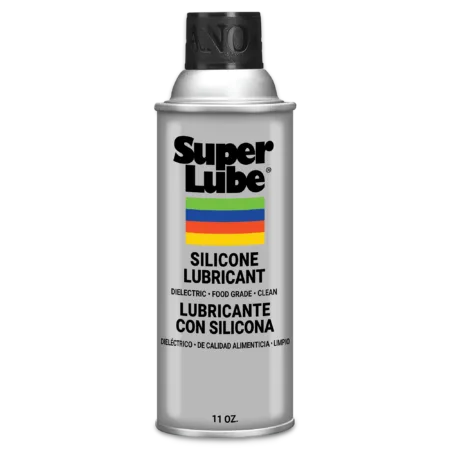
| Super Lube 91110 Silicone Lubricant | Non-drying silicone film; -40°F to 392°F | Rubber seals, O-rings, gaskets, weatherstripping, windows, treadmills | Use caution on plastics and painted or lacquered finishes |
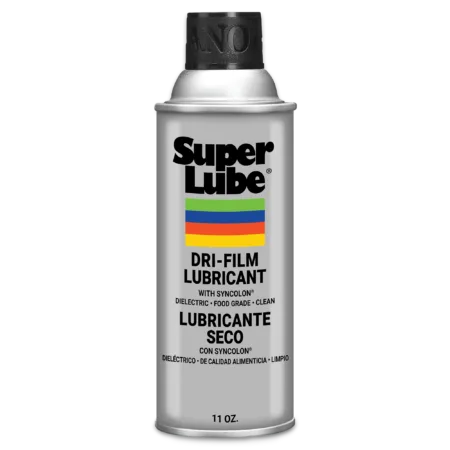
| Super Lube 11016 Dri-Film with Syncolon | Dries on contact to a white, non-oily PTFE film; -45°F to 500°F | Locks, slides and glides, zippers, window guides, dusty areas, precision mechanisms | On plastics, Super Lube says “most plastics not under stress” |
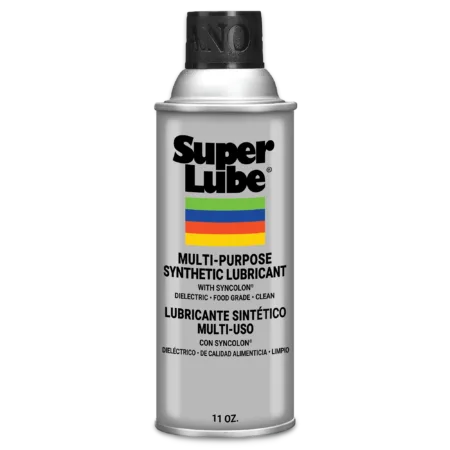
| Super Lube 31110 Multi-Purpose Synthetic Lubricant | Non-drying NLGI 2 synthetic grease with Syncolon; -45°F to 450°F | Hinges, chains, bearings, open gears, garage doors, marine winches | Wet film attracts dirt in dusty places |
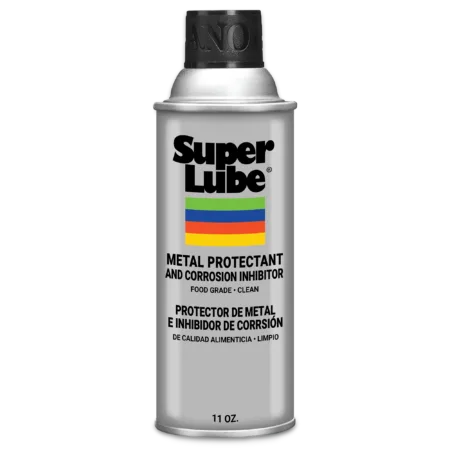
| Super Lube 83110 Metal Protectant and Corrosion Inhibitor | Penetrating synthetic oil that leaves a protective film | Rust protection on tools, fasteners and equipment in storage | A protectant first, not a grease substitute |
All four are extremely flammable aerosols; read each label and SDS, use them with ventilation and away from flames, and remember that aerosols ship by ground to the contiguous US only.
Silicone spray vs PTFE spray: wet film or dry film?
The real difference is what stays behind after the solvent flashes off.
Silicone spray stays wet. Super Lube describes 91110 as a general-purpose liquid aerosol lubricant designed to reduce friction in non-load-bearing mechanical assemblies. It leaves a non-drying film that is safe on rubber, repels moisture, and, according to Super Lube, protects well against rust and corrosion and has high dielectric capability. That makes it the natural choice for rubber door and window seals, O-rings, grommets, weatherstripping and treadmill decks, and as a mold release. The trade-off is that a wet film collects dust, and Super Lube cautions that it may negatively affect painted or lacquered finishes, so be careful near plastic trim and finished surfaces.
PTFE dry film dries on contact. Super Lube 11016 is a Syncolon (PTFE) powder in a fast-evaporating solvent. It cleans as it goes on, then leaves a white, non-oily film with a low coefficient of friction that will not attract dust and is not affected by oil, water or solvents. That suits lock cylinders, drawer and machine slides, zippers, window guides, clockworks, musical instruments, model cars and anything that has to stay clean. Super Lube rates it from -45°F to 500°F, lists it as non-conducting and says it forms an insulating barrier on electronics. It works on wood, paper, glass, rubber, fabric, leather, vinyl, metal and most plastics that are not under stress.
When you need spray grease instead
Neither silicone spray nor dry film is made for heavily loaded metal parts. For those, Super Lube 31110 is, in Super Lube’s words, a multi-purpose grease in aerosol form: the same NLGI 2 synthetic grease with Syncolon, delivered through a straw so it penetrates hinges, chain links and bearing seals before the solvent evaporates and leaves a non-drying grease film. Super Lube lists bearings, conveyors, chains, pumps, open gears, door hinges, trunk latches, garage doors, lawnmowers, bicycles, fishing gear and marine winches, pulleys and sail tracks among its uses, and says it remains free-flowing in freezing temperatures and resists water and salt water. It is NSF H1 registered (#125824) for incidental food contact.
If you only need a dab in one spot, a tube of grease is less messy; the spray earns its place where a grease gun or brush cannot reach.
Which spray lubricant for common jobs
- Car door and trunk weatherstripping, window channels: silicone spray (91110).
- Squeaky door hinge, garage door hinges and rollers: spray grease (31110).
- Sticky lock cylinder, padlock, file cabinet slides: dry film (11016); it will not gum up with dust.
- Bicycle or roller chain: spray grease (31110) for load and water; dry film (11016) where dust is the bigger problem.
- Zippers and sliding window guides: dry film (11016).
- Rubber O-rings and gaskets during assembly: silicone spray, or a liquid O-ring lubricant; see our O-ring lubricant page.
- Tools and hardware going into storage: corrosion inhibitor (83110). Our corrosion prevention guide covers it.
Does silicone spray damage plastic or paint?
It can affect some finishes. Super Lube’s own data sheet says caution should be used when applying 91110 to plastic or finished surfaces because it may negatively affect painted or lacquered finishes. Spray onto a rag and wipe it on near trim, or test in a hidden spot. Also keep silicone away from parts you plan to paint, since silicone residue is difficult to remove and can interfere with paint adhesion.
How to apply spray lubricants
- Wipe the area clean first; Super Lube’s directions for 91110 say to wipe the area to be sprayed.
- Shake the can before and during use.
- Hold the can about 8 inches away for a light coat, or use the extension straw for pinpoint application.
- Work the part (open and close the hinge, cycle the lock) to spread the film.
- Wipe off overspray, especially from floors, glass and painted surfaces.
Frequently asked questions
What is dry film lubricant?
A spray that dries on contact to a thin solid lubricant film. Super Lube 11016 leaves a white PTFE (Syncolon) film that is non-oily and does not attract dust.
Is PTFE spray better than silicone spray?
Neither in general. PTFE dry film suits locks, slides and dusty places; silicone suits rubber seals, weatherstripping and O-rings.
Does silicone lubricant prevent rust?
Super Lube says its silicone aerosol protects well against rust and corrosion, but for long-term storage protection a dedicated inhibitor such as 83110 is the more targeted choice.
What is the difference between Super Lube 31110 and 91110?
31110 is a synthetic NLGI 2 grease in a spray can for loaded metal parts; 91110 is a silicone spray for rubber, seals and light-duty mechanisms.
Bottom line
Silicone spray for rubber and weatherstripping, PTFE dry film for clean, dust-free mechanisms, synthetic spray grease for loaded metal parts, and a corrosion inhibitor for storage. If you would rather apply oil by the drop, compare our Super Lube oils, or browse every option on our greases and oils page.
Products in this guide
-
Super Lube
Super Lube 91110 Silicone Lubricant, 11 oz Aerosol
Original price was: $16.99.$15.19Current price is: $15.19.In stock — ships in 1–3 days
- Ground ship only
- NSF H1 food grade
-
Super Lube
Super Lube 11016 Dri-Film Lubricant with Syncolon, 11 oz Aerosol
Original price was: $16.99.$14.99Current price is: $14.99.Out of stock
- Ground ship only
- NSF H1 food grade
-
Super Lube
Super Lube 31110 Multi-Purpose Synthetic Lubricant with Syncolon, 11 oz Aerosol
Original price was: $19.99.$16.99Current price is: $16.99.Out of stock
- Ground ship only
- NSF H1 food grade
-
Super Lube
Super Lube 83110 Metal Protectant & Corrosion Inhibitor, 11 oz Aerosol
Original price was: $20.90.$17.39Current price is: $17.39.Out of stock
- Ground ship only
- NSF H1 food grade
Sources
- Super Lube Silicone Aerosol (91110), technical data sheet
- Super Lube Silicone Aerosol, safety data sheet
- Super Lube Dri-Film Lubricant with Syncolon (11016), technical data sheet
- Super Lube Dri-Film aerosol, safety data sheet
- Super Lube Multi-Purpose Synthetic Lubricant aerosol (31110), technical data sheet
- Super Lube Metal Protectant and Corrosion Inhibitor (83110), product page