On most 3D printers, threaded lead screws get a thin film of grease, smooth steel rods get a light oil (mainly to stop rust), and belts and carbon-fiber rods get nothing at all. Linear rails are the exception to any rule of thumb: some printer makers specify one lubricant for them and tell you not to substitute. So check your printer’s maintenance page first, then use the table below to match a lubricant to each part.
FACTOVAL is not affiliated with Bambu Lab or Prusa Research. Their names are used only to identify the printers and published guidance referenced here.
Lubricant by part
| Part | What to use | Printer-maker guidance (examples) | Our options |
|---|---|---|---|
| Z-axis lead screws (threaded) | A thin coat of grease | Bambu Lab X1 and P1: clean and grease every three months; names Super Lube 92003 as a popular alternative to the grease it links. Prusa MK4: do not lubricate the threaded Z lead screws or trapezoid nuts | Super Lube 92003 or 21030 |
| Smooth steel rods with linear bearings | Clean, then a thin film of light oil or grease | Bambu Lab: after cleaning with isopropyl alcohol, add a thin, uniform coat to prevent rust; refers to Super Lube 52004. Prusa: a small amount of Prusa Lubricant | Super Lube 52004; 51010 precision oiler |
| Linear rails (carriage on a profiled rail) | Whatever the printer maker specifies | Prusa CORE One INDX: only its rail lubrication set. Bambu Lab A1: oil; grease is prohibited on the X-axis linear rail | Follow the maker |
| Carbon-fiber rods | Nothing; clean only | Bambu Lab: don’t use grease; clean with isopropyl alcohol | None needed |
| Belts | Nothing | Bambu Lab: don’t add grease to belts; it can cause slipping or layer shifts | None needed |
| Idler pulleys, only if squeaking | A small amount of light oil between the idler flange and its holder | Bambu Lab: the sealed bearings need no grease; refers to Super Lube 52004 | Super Lube 52004 |
Why grease on screws and oil on rods
A lead screw nut rides on the threads as it moves the bed, so a film of grease that stays put is the right fit there. Smooth rods run through linear bearings that Bambu Lab says are greased at the factory; the rod itself mainly needs protection from rust and freedom from dust. Heavy grease on exposed surfaces collects debris. Bambu Lab switched the A1’s Y-axis guide rail from grease to oil after user feedback that the grease was sticky and attracted dust and debris.
More is not better anywhere on a printer. Prusa calls for “a small amount,” and Bambu Lab warns that too much oil can drip onto the linear bearings.
Lead screws, step by step
This is Bambu Lab’s published procedure for the X1 and P1 series; it works for most printers with exposed Z lead screws.
- Clean dust and plastic particles off the screws with a lint-free cloth.
- With the bed homed, apply a thin coat of grease along each screw.
- Move the bed to a lower position and apply another thin coat.
- Home the printer again, and repeat the movement a few times to spread the grease evenly.
- Wipe away any excess that builds up near the lead screw nuts.
Bambu Lab’s interval is every three months. If you own a Prusa MK4, skip this: Prusa says not to lubricate its Z lead screws or trapezoid nuts.
Smooth rods, step by step
- Check the rods monthly for dust and buildup. Bambu Lab suggests cleaning every five rolls when printing ABS or ASA.
- Wipe them with isopropyl alcohol on a lint-free cloth, keeping the alcohol out of the bearings.
- Apply a thin, uniform coat of light oil to prevent rust. Bambu Lab suggests an anti-rust treatment every three months.
- Move the axis back and forth, then remove any drips with a cotton swab.
- Keep every lubricant off the build plate. Bambu Lab suggests removing the plate while you work.
Choosing among our Super Lube products
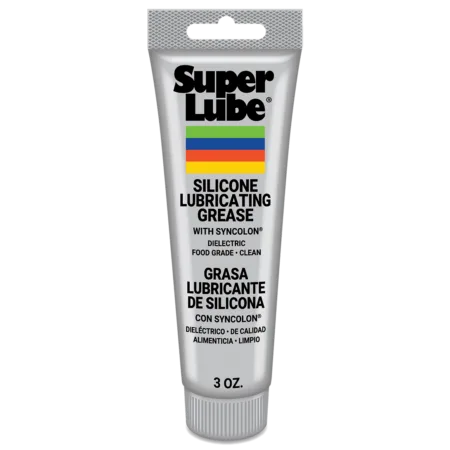
- Super Lube 92003 Silicone Lubricating Grease with Syncolon: NLGI 2 silicone grease with PTFE, rated -40°F to 500°F (-40°C to 260°C) and listed by Super Lube for plastic parts and gears. It’s the Super Lube grease Bambu Lab’s wiki names for lead screws.
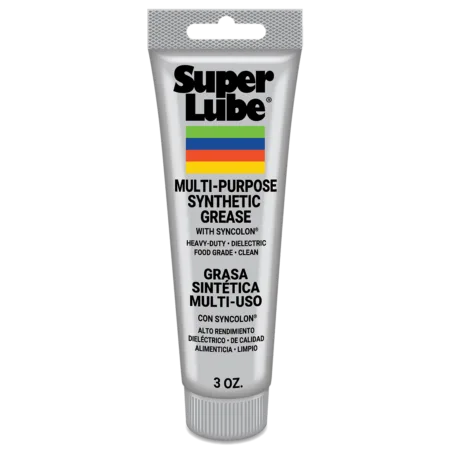
- Super Lube 21030 Multi-Purpose Synthetic Grease with Syncolon: NLGI 2 synthetic grease with PTFE, -45°F to 450°F (-43°C to 232°C). Super Lube states it contains no silicone, which matters if the same bench is used for painting or finishing.
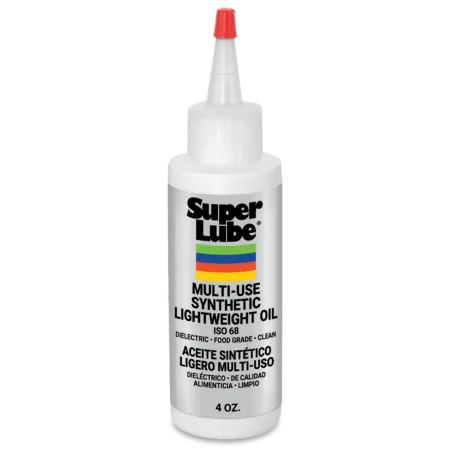
- Super Lube 52004 Synthetic Lightweight Oil: a clear ISO 68 synthetic oil, zinc- and metal-free, with a -54°F (-48°C) pour point. It’s the oil Bambu Lab’s wiki refers to for rods and idlers.
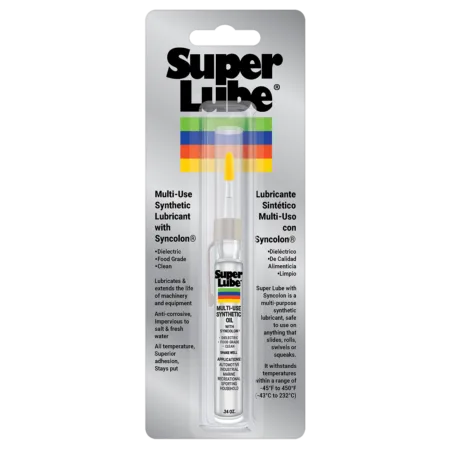
- Super Lube 51010 precision oiler: 7 mL of ISO 100 synthetic oil with PTFE in a precision oiler, handy for placing single drops.
Comparing the two oils? See Super Lube 51004 vs 52004.
Frequently asked questions
Can I use WD-40 on my 3D printer?
Bambu Lab’s A1 guide lists WD-40 Multi-Use Product as an option for the A1 and A1 mini rails and lead screw and says it hasn’t tested other oils on those parts. For other printers, follow that printer maker’s guidance.
How often should I lubricate a 3D printer?
Bambu Lab says to grease X1 and P1 lead screws every three months and to lubricate the A1’s Y-axis rail once a month; Prusa suggests every three to six months for the CORE One INDX linear rail. Check rods for dust monthly either way.
Should I lubricate the extruder gears?
It depends on the printer. Prusa says the MK4’s extruder gear and idler bearings need no lubricant, while Bambu Lab’s A1 guide lists extruder wheels among the uses for its supplied grease. Follow your model’s guide.
Bottom line
Grease the threads, oil the steel, leave belts and carbon rods dry, and use exactly what your printer maker specifies for linear rails. Apply thin films, wipe the excess and keep lubricant off the build plate. Shop all 3D printer lubricants or the full greases and oils range, and find data sheets on our technical documents page.
Sources
- Bambu Lab Wiki, X1 series basic maintenance: wiki.bambulab.com
- Bambu Lab Wiki, P1P maintenance: wiki.bambulab.com
- Bambu Lab Wiki, how to lubricate the A1 Y-axis guide rail: wiki.bambulab.com
- Prusa Research, Regular printer maintenance (MK4): help.prusa3d.com
- Prusa Research, Regular printer maintenance (CORE One INDX): help.prusa3d.com
- Super Lube, Silicone Lubricating Grease product page: super-lube.com
- Super Lube, Multi-Use Synthetic Lightweight Oil (ISO 68) product page: super-lube.com
- Kano Laboratories, Super Lube Multi-Purpose Synthetic Grease with Syncolon technical data sheet: FACTOVAL technical documents page
- Kano Laboratories, Super Lube Multi-Use Oil with Syncolon technical data sheet: FACTOVAL technical documents page
Products in this guide
-
Super Lube
Super Lube 92003 Silicone Lubricating Grease with Syncolon, 3 oz Tube
Original price was: $14.99.$13.99Current price is: $13.99.In stock — ships in 1–3 days
- NSF H1 food grade
- Dielectric
-
Super Lube
Super Lube 21030 Multi-Purpose Synthetic Grease with Syncolon, 3 oz Tube
$11.99In stock — ships in 1–3 days
- NSF H1 food grade
- Dielectric
-
Super Lube
Super Lube 52004 Synthetic Lightweight Oil, 4 oz Bottle
Original price was: $13.99.$10.99Current price is: $10.99.In stock — ships in 1–3 days
- NSF H1 food grade
- Made in USA
-
Super Lube
Super Lube 51010 Multi-Purpose Synthetic Oil with Syncolon, 7 mL Precision Oiler
Original price was: $24.39.$16.99Current price is: $16.99.In stock — ships in 1–3 days
- NSF H1 food grade
- Made in USA