NSF H1 is a registration category in NSF International’s Nonfood Compounds Registration Program for lubricants that are acceptable where incidental food contact can happen: on machinery in and around food processing areas where the lubricated part might touch food. An H1 lubricant must meet FDA requirements for lubricants with incidental food contact (21 CFR 178.3570) and should be used in the minimum amount that does the job. H1 doesn’t mean edible, and it isn’t the same as H2 (no possibility of food contact) or 3H (release agents for food-contact surfaces).
The NSF categories at a glance
The wording below is summarized from NSF registration certificates.
| Code | What NSF says it’s acceptable for | Example |
|---|---|---|
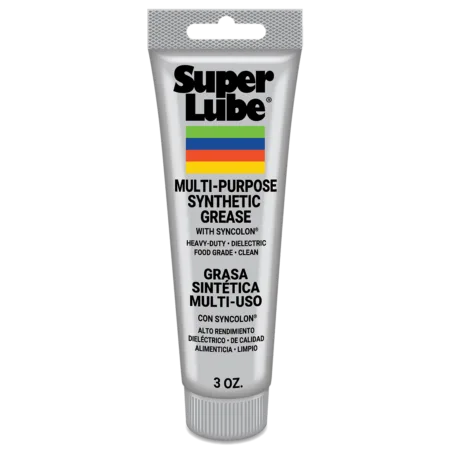
| H1 | Lubricant with incidental food contact, in and around food processing areas: a protective anti-rust film, a release agent on gaskets or seals of tank closures, or a lubricant where the lubricated part could be exposed to food | Super Lube Multi-Purpose Synthetic Grease (Reg. #096790) |
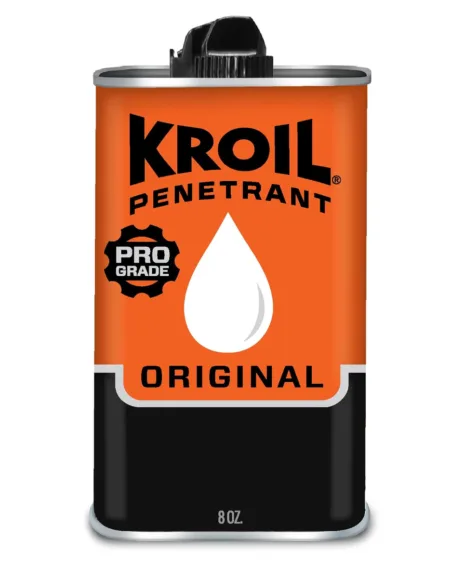
| H2 | Lubricant, release agent or anti-rust film where there is no possibility of the lubricant or lubricated part contacting edible products | Kroil Original Penetrant, liquid (Reg. #165745) |
| HT1 | Heat transfer fluid where incidental food contact is possible | Super Lube Silicone Lubricating Grease, registered H1 and HT1 (Reg. #141974) |
| H3 | Soluble oil that prevents rust on hooks, trolleys and similar equipment; treated equipment must be washed or wiped before it goes back into service | None in our range |
| 3H | Release agent on grills, ovens, loaf pans, boning benches, chopping boards or other hard surfaces in contact with meat and poultry | None in our range |
What H1 registration does and doesn’t promise
- Incidental means accidental. The FDA rule allows these lubricants on food machinery only if the amount used is the minimum required for the technical effect and any constituent reaching food stays within set limits. For mineral oil, the limit is 10 parts per million in food.
- Anti-rust films come off before production. NSF’s H1 certificates say that a product used as an anti-rust film must be removed by washing or wiping so nothing can transfer to food.
- It isn’t a performance rating. NSF states that listing is not an endorsement of the product or of the manufacturer’s performance claims.
- It continues the old USDA system. NSF describes its program as a continuation of the USDA product approval and listing program, based on FDA requirements for use, ingredients and labeling. That’s why data sheets still say “meets former USDA (H1) guidelines.”
How to verify a registration
NSF says a registration is current when two things are true: the NSF Registration Mark and category code appear on the product label NSF reviewed, and the registered product name is listed in the NSF White Book at nsfwhitebook.org. Each product has a registration number, and NSF publishes a certificate for it. “Food grade” on a spec sheet without a registration number is a claim, not a registration.
Which of our products are NSF registered
Each registration below was checked against NSF’s own certificates, dated July 2026.
| Product (part numbers we carry) | NSF category | NSF Reg. No. |
|---|---|---|
| Super Lube Multi-Purpose Synthetic Grease with Syncolon (21010, 21030, 21036, 41150, 41160) | H1 | 096790 |
| Super Lube Multi-Use Synthetic Oil with Syncolon (51004, 51010, 51600) | H1 | 136742 |
| Super Lube Synthetic Lightweight Oil, ISO 68 (52004) | H1 | 136306 |
| Super Lube Air Tool Lubricant (12004) | H1 | 127200 |
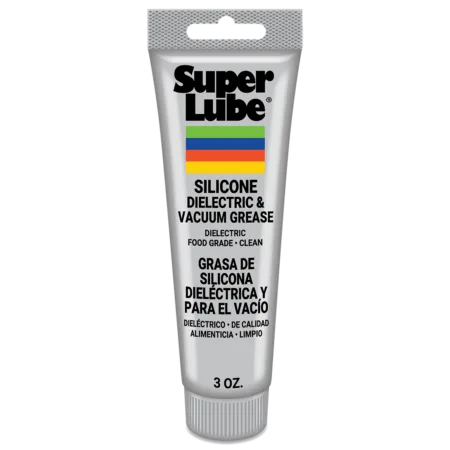
| Super Lube Silicone Dielectric and Vacuum Grease (91003) | H1 | 141973 |
| Super Lube Silicone Lubricating Grease with Syncolon (92003, 92150, 92016) | H1, HT1 | 141974 |
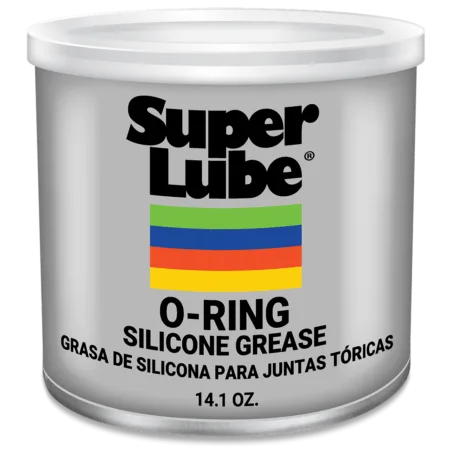
| Super Lube O-Ring Silicone Grease (93016) | H1 | 156444 |
| Super Lube O-Ring Silicone Lubricant (56204) | H1 | 156449 |
| Super Lube Silicone Oil, 100 and 5,000 cSt (56104, 56504) | H1 | 151067 |
| Super Lube Multi-Purpose Synthetic Lubricant, aerosol (31110) | H1 | 125824 |
| Super Lube Dri-Film Lubricant with Syncolon, aerosol (11016) | H1 | 136743 |
| Super Lube Silicone Lubricant, aerosol (91110) | H1 | 136589 |
| Super Lube Metal Protectant and Corrosion Inhibitor, aerosol (83110) | H1 | 156447 |
| Kroil Original Penetrant, liquid (KL081, KL011) | H2 | 165745 |
We could not confirm an NSF registration for these products, so we don’t describe them as food grade: Super Lube 97008 brake grease, 82003 connector gel and 98003 heat sink compound; Kroil aerosols (AeroKroil), SiliKroil and Microil; DeoxIT contact treatments; and ASI sealants, which carry different listings, covered next.
Other “food” labels you’ll see
- NSF/ANSI 51 is a standard for materials used in commercial food equipment, including sealants and gaskets. It is not a lubricant category. ASI’s data sheet for its ASI 502 sealant lists NSF Standard 51 and calls it acceptable as a sealant on surfaces with incidental food contact.
- FDA 21 CFR 177.2600 covers rubber articles intended for repeated use. ASI lists it for ASI 502 and ASI 509.
- Kosher and Halal certifications, which many Super Lube products carry, are religious dietary certifications, not food-safety registrations.
Frequently asked questions
Is NSF H1 the same as food safe?
Not exactly. H1 means acceptable for incidental contact, in the smallest amount that does the job, under FDA rules. It isn’t a food ingredient, and visible lubricant should be kept off food.
What’s the difference between H1 and H2?
H1 lubricants may be used where the lubricated part could touch food; H2 lubricants only where there is no possibility of food contact. Liquid Kroil, for example, is H2.
Can one product hold more than one NSF category?
Yes. NSF registers Super Lube Silicone Lubricating Grease as both H1 and HT1 under a single number, #141974.
Bottom line
NSF H1 means a lubricant is registered for incidental food contact, not that it’s edible, and the registration only counts when the NSF mark, category code and White Book listing line up. For food plants, kitchens and food-equipment repairs, look for H1 and use as little as works. Shop all food grade greases and NSF H1 lubricants, read what Super Lube grease is, and download data sheets from our technical documents page.
Sources
- NSF certificate, Super Lube Multi-Purpose Synthetic Grease with Syncolon, H1, Reg. #096790: PDF
- NSF certificate, Super Lube Silicone Lubricating Grease with Syncolon, H1 and HT1, Reg. #141974: PDF
- NSF certificate, Kroil, H2, Reg. #165745: PDF
- NSF certificate showing 3H and H3 category wording (Reg. #169802, a product we don’t sell): PDF
- NSF certificates for the other registrations listed, by number: 136742, 136306, 127200, 141973, 156444, 156449, 151067, 125824, 136743, 136589, 156447
- 21 CFR 178.3570, Lubricants with incidental food contact: law.cornell.edu
- 21 CFR 177.2600, Rubber articles intended for repeated use: law.cornell.edu
- NSF, Food Equipment Standards (NSF/ANSI 51): nsf.org
- NSF White Book, Nonfood Compounds listings: nsfwhitebook.org
- American Sealants Inc., ASI 502 technical data sheet: PDF
Products in this guide
-
Super Lube
Super Lube 21030 Multi-Purpose Synthetic Grease with Syncolon, 3 oz Tube
$11.99In stock — ships in 1–3 days
- NSF H1 food grade
- Dielectric
-
Super Lube
Super Lube 91003 Silicone Dielectric & Vacuum Grease, 3 oz Tube
$15.99In stock — ships in 1–3 days
- NSF H1 food grade
- Dielectric
-
Super Lube
Super Lube 93016 O-Ring Silicone Grease, 14.1 oz Canister
$30.99In stock — ships in 1–3 days
- NSF H1 food grade
- Dielectric
-
Kroil
Kroil KL081 Original Penetrating Oil, 8 oz Drip Bottle
$20.99In stock — ships in 1–3 days
- Ground ship only
- Made in USA