
An 8 oz butane canister lasts roughly 65 to 70 minutes on a 9,000 BTU portable stove running wide open, a little over 2 hours at half flame, and around 4 hours on a low simmer. Those numbers come from the energy in the fuel, not from a marketing claim, and real runtime also depends on wind, pot size and temperature. Below is the math, a runtime table, and the storage, cold-weather and disposal answers people look for next.
Products in this guide
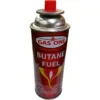 GasOne Butane Fuel Canister, 8 oz$6.99
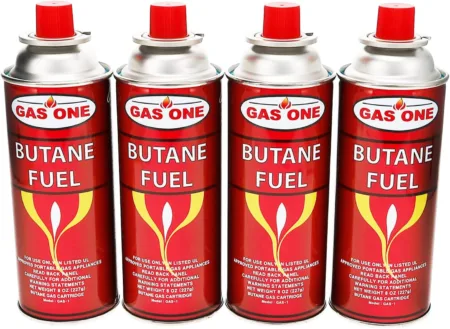
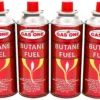 GasOne Butane Fuel Canisters, 8 oz (Pack of 4)$11.49
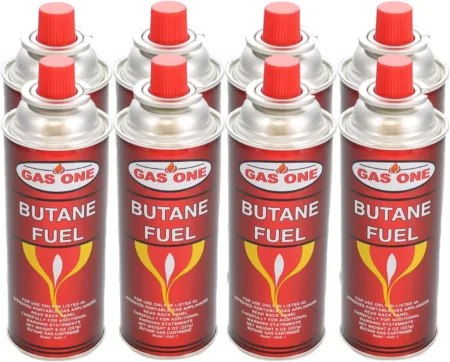
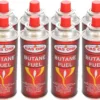 GasOne Butane Fuel Canisters, 8 oz (Pack of 8)$16.99
The math behind the runtime
A GasOne GAS-1 canister holds 8 oz (227 g) of butane, which is half a pound. Engineering reference tables put the heating value of butane at about 21,100 BTU per pound (higher heating value) or about 19,500 BTU per pound (lower heating value). Half a pound therefore holds roughly 9,700 to 10,500 BTU of heat.
Stoves are rated by how many BTU per hour they burn at full output. Gas One’s GS-3000 portable butane stove, which is built around the 8 oz canister, is rated at 9,000 BTU. Divide the fuel by the burn rate and you get about 1.1 hours at full blast. Turn the flame down and the same can lasts proportionally longer.
A quick rule of thumb: one 8 oz can holds about 10,000 BTU. Divide 10,000 by your stove’s BTU rating to get hours at full flame.
Estimated runtime per 8 oz canister
| Burner setting on a 9,000 BTU stove | Approximate fuel use | Estimated runtime per can |
|---|---|---|
| Full flame (boiling, searing) | 9,000 BTU/hr | About 65 to 70 minutes |
| Half flame (frying, sautéing) | 4,500 BTU/hr | About 2 hours 10 to 20 minutes |
| Low simmer (sauces, keeping warm) | 2,250 BTU/hr | About 4 hours 20 to 40 minutes |
These are calculated estimates, not test results. Expect less in wind, with a pot that is too small for the burner, without a lid, or when the canister is cold. A smaller stove rated at, say, 7,000 BTU runs about 1.4 hours per can at full output by the same math.
How many canisters to bring
Estimate cooking time per meal and how hard you run the burner. Two meals a day of about 30 minutes each at half flame use roughly 4,500 BTU, so one can covers about two days. Boiling water for coffee and dehydrated meals uses full flame but only for a few minutes at a time. Always pack one spare can beyond your estimate. Our pack sizes are:
- GasOne 8 oz butane canister (single) to top up a stove kit.
- GasOne 8 oz butane canisters, pack of 4 for a weekend camping trip.
- GasOne 8 oz butane canisters, pack of 8 for regular campers and small caterers.
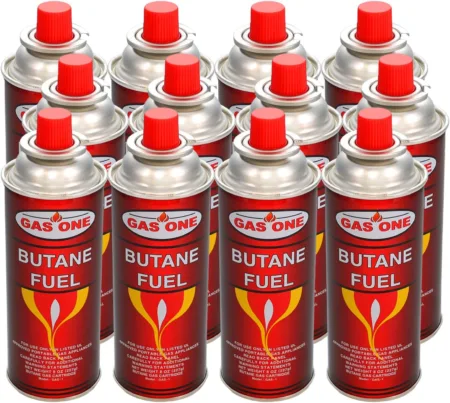
- GasOne 8 oz butane canisters, pack of 12 for emergency kits and food-service stations that run every day.
- GasOne 8 oz butane canisters, pack of 24, two 12-packs at the lowest cost per can, for caterers and events.
All five are the same GAS-1 canister. See every option on our portable fuels page.
Why butane slows down in the cold
Butane boils at about 32°F (0°C), according to NIST reference data. A stove draws vapor from the top of the canister, and as the liquid boils off it also cools the can. Near freezing, the can produces less vapor, so the flame shrinks and the effective runtime drops even though fuel is still inside. Practical fixes:
- Store spare cans somewhere above freezing, such as inside your vehicle on a winter night, and put a can on the stove just before you cook.
- Shield the flame from wind with your body or the stove’s built-in wind guard, but never wrap the stove or the canister compartment in foil or a windscreen, and never use a pan so large it covers the canister compartment. Trapped heat can overheat the can.
- For regular use below freezing, consider a propane stove; our butane vs propane guide explains the trade-off.
Connecting the canister correctly
Gas One’s stove manual explains that its butane canisters are designed for vapor withdrawal only, which is done by lining up the notch in the canister’s collar with the extension bar on the stove regulator. If the canister will not seat with the notch aligned, do not force it. Many portable butane stoves sold in the US use this 8 oz notched-collar format, but always confirm the canister type in your stove’s manual before you buy.
Storage, expiration and disposal
- Heat: Gas One warns never to store butane near high heat, open flames, pilot lights, direct sunlight or anywhere the temperature exceeds 120°F (49°C). A closed vehicle in summer can easily pass that, so do not leave cans in a parked car or truck bed.
- Refilling: the GAS-1 is a non-refillable canister. Do not refill it.
- Expiration: Gas One does not publish an expiration date. The fuel itself is stable; the can is what ages. Retire any can that is dented, rusted at the seams or valve, or hisses when it is not connected.
- Disposal: never put a used canister into a fire, which Gas One warns can cause an explosion. Rules for empty cans vary by city and county, so check with your local waste or household hazardous waste program.
Shipping and returns
We ship butane canisters by ground only, to New Jersey, New York and Florida (no P.O. boxes). The 4-, 8-, 12- and 24-packs ship free to NJ and NY, and orders of $35 or more ship free. Because they are hazardous materials, they cannot be returned for a change of mind; report damaged items with photos within 7 days. See the shipping policy for details.
Frequently asked questions
How long does an 8 oz butane canister last on high?
About 65 to 70 minutes on a 9,000 BTU stove at full flame, based on the energy in 8 oz of butane. Lower-output stoves run longer.
Are butane canisters refillable?
The GasOne GAS-1 is a non-refillable canister. Use it until empty, then dispose of it according to local rules.
Do butane canisters expire?
Gas One does not print a shelf life. Store cans below 120°F (49°C) and retire any can that is dented, rusted or leaking.
Are butane canisters universal?
Many portable butane stoves use the 8 oz notched-collar canister, but not all. Check the canister type named in your stove’s manual.
Bottom line
Plan on about 10,000 BTU per 8 oz can: roughly an hour at full flame on a 9,000 BTU stove, two hours at half, four or more on a simmer. Keep cans warm in cold weather, cool in hot weather, and never refill or burn them. Feeding a buffet instead of a camp stove? See how long chafing fuel lasts.
Shopping for fuel? Compare GasOne butane fuel canisters by pack size, and if you live in New York City or New Jersey, see how to dispose of canisters in NYC and NJ.
Products in this guide
-
Gas One
GasOne Butane Fuel Canister, 8 oz
$6.99In stock — ships in 1–3 days
- Ships to NJ/NY/FL only
- Ground ship only
-
Gas One
GasOne Butane Fuel Canisters, 8 oz (Pack of 4)
$11.49$2.87 / can
In stock — ships in 1–3 days
- Free ship NJ/NY
- Ships to NJ/NY/FL only
-
Gas One
GasOne Butane Fuel Canisters, 8 oz (Pack of 8)
$16.99$2.12 / can
In stock — ships in 1–3 days
- Free ship NJ/NY
- Ships to NJ/NY/FL only
-
Gas One
GasOne Butane Fuel Canisters, 8 oz (Pack of 12)
$25.99$2.17 / can
In stock — ships in 1–3 days
- Free ship NJ/NY
- Ships to NJ/NY/FL only
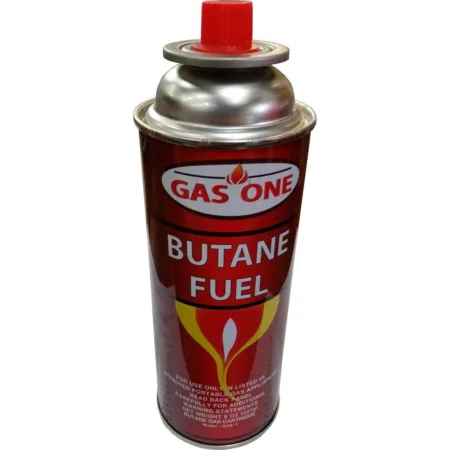
Sources
- Gas One: GS-3000 9,000 BTU Portable Butane Camp Stove (product page)
- Gas One: GS-3000 owner’s manual (canister type, vapor withdrawal, storage warnings)
- Gas One 2023 wholesale catalog (8 oz butane canister, SKU GAS-1)
- The Engineering ToolBox: Fuels, higher and lower calorific values (butane)
- NIST Chemistry WebBook: Butane, phase change data (normal boiling point)