Penetrating oil and lubricant are not the same thing: a penetrating oil is thin enough to creep into rusted threads and free a stuck part, while a lubricant (an oil or a grease) is made to stay on a moving part and keep it from wearing. Grease is oil held in place by a thickener, and a contact cleaner is a separate product for electrical connections, not for mechanical ones. Start with the problem in front of you: is the part stuck, moving, sealing, or carrying current?
Products in this guide
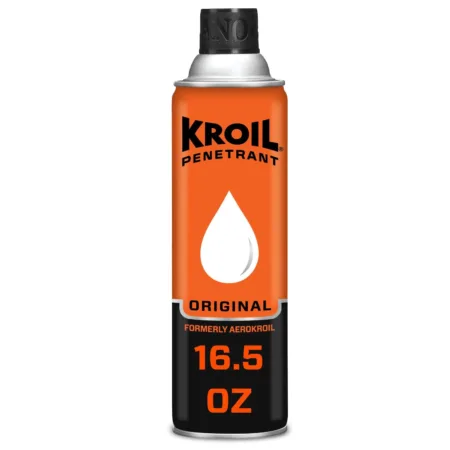
 Kroil KS162 AeroKroil Original Penetrant, 16.5 oz Aerosol Original price was: $35.99.$31.59Current price is: $31.59.
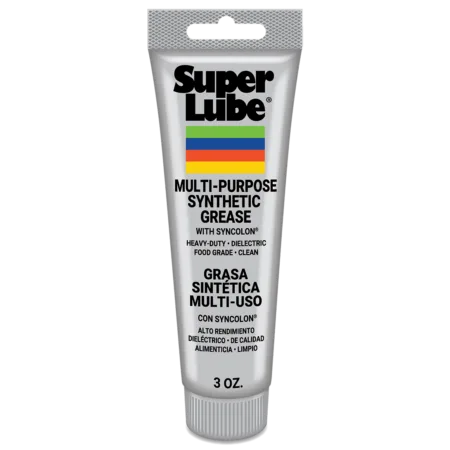
 Super Lube 21030 Multi-Purpose Synthetic Grease with Syncolon, 3 oz Tube Original price was: $13.99.$12.39Current price is: $12.39.
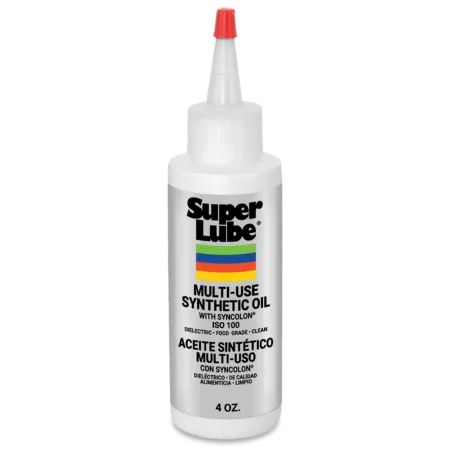
 Super Lube 51004 Multi-Purpose Synthetic Oil with Syncolon, 4 oz Bottle Original price was: $12.99.$11.99Current price is: $11.99.
The short answer: match the product to the problem
| Your problem | Product type | Why it fits | Example we stock |
|---|---|---|---|
| Bolt, nut, pulley or shaft rusted solid | Penetrating oil | Low surface tension lets it creep into threads and the corrosion bond | Kroil KS162 AeroKroil Original Penetrant |
| Bearing, slide, hinge or gear that must keep moving under load | Grease | Stays where you put it, seals out water, lasts between service intervals | Super Lube 21030 synthetic grease |
| Small mechanism, chain, pivot or machine way you reach with a drip | Oil | Flows into tight clearances without adding drag | Super Lube 51004 synthetic oil |
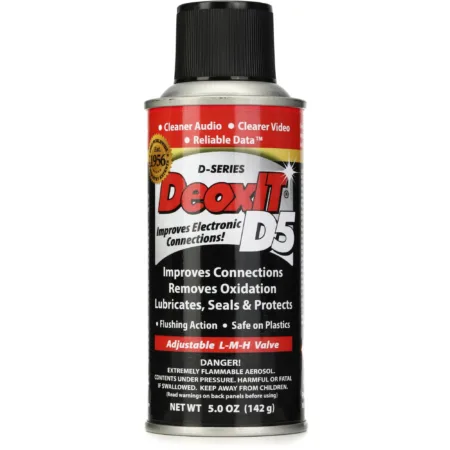
| Crackling audio, intermittent switch, oxidized connector | Contact cleaner / treatment | Dissolves oxidation on metal contacts and leaves a thin protective film | DeoxIT D5S-6 contact cleaner spray |
| O-ring, rubber seal or plastic gear | Silicone grease or fluid | Compatible with most rubbers and plastics (with one exception, below) | See our O-ring lubricant page |
Penetrating oil: for freeing parts, not for long-term lubrication
Kano Laboratories describes Kroil as a petroleum-based penetrating oil that works by capillary action. Its low surface tension lets it flow into the microscopic gaps between corroded surfaces, displace moisture and reduce the friction and adhesion that keep a part locked. Kano is also clear about what it does not do: Kroil does not chemically dissolve rust. It works around and beneath the rust so the part can be turned with less force.
Give it time. Kano says Kroil typically begins to penetrate within 15 to 30 minutes, and heavily corroded parts benefit from a soak of several hours or overnight, with a second application after the first soak.
Kroil does leave a light lubricating film, but it is thin by design. Once a seized bearing or pivot turns freely, clean it and reassemble it with the grease or oil that part actually calls for. If you want a penetrant that leaves longer-lasting lubrication on hinges, slides, chains and gate valves, Kano makes SiliKroil, which adds dimethyl silicone to the Kroil base. Our penetrating oils page lists both.
Safety basics: the liquid has a flash point of 132°F (55.5°C) and the aerosol is a flammable aerosol, so keep both away from sparks, flames and hot surfaces, and work with good ventilation. Kano also notes that prolonged contact with certain plastics or rubber compounds may cause softening or swelling.
Grease vs oil: the same job with different staying power
Most greases are a base oil plus a thickener, and the NLGI grade tells you how firm the result is. NLGI 2 is a widely used general-purpose consistency for bearings, slides and chassis points. Grease stays put on vertical and exposed surfaces, which is why it is the default for anything that sees water, dirt or long service intervals.
Oil wins where grease would add drag or cannot reach: small pivots, chains, cables, machine ways, enclosed gears and light mechanisms. A drip of oil wicks into the clearance; a dab of grease sits on top of it.
The two Super Lube products in the table above share the same idea, synthetic base fluids carrying Syncolon (Super Lube’s PTFE micro powder), in two consistencies:
- Super Lube 21030 is an NLGI 2 grease rated from -45°F to 450°F (-43°C to 232°C), NSF H1 registered (#096790) for incidental food contact, and it contains no silicone, so Super Lube rates it safe around paint spraying and finishing operations.
- Super Lube 51004 is an ISO 100 oil (118 cSt at 40°C) rated for continuous use from -45°F to 450°F (-43°C to 232°C), NSF H1 registered (#136742), and Super Lube lists it as safe on metal, plastic, wood, leather, painted surfaces and most rubbers.
If the equipment touches food, look for the NSF H1 registration number on the data sheet; our food grade grease page groups the H1 products. For everything else in this family, browse greases and oils.
Silicone or synthetic? Check what the part is made of
Silicone greases and fluids are the usual choice for rubber seals and plastic-on-plastic parts because they are compatible with the majority of rubber and plastic compounds. The exception is silicone rubber itself: Super Lube’s own compatibility charts for its O-ring silicone products list silicone rubber (VMQ and related types) as not compatible. For a silicone seal, use the lubricant the seal or equipment maker specifies. In paint and finishing shops, a silicone-free grease avoids contaminating surfaces that will be painted.
Contact cleaner: for electrical connections only
Electrical problems need a different product. CAIG’s DeoxIT D5S-6 is a 5% solution of DeoxIT D100L in odorless mineral spirits with a propellant. The D100L concentrate has about 20% deoxidizing action, so it removes oxidation from metal contacts and then leaves a thin film that protects the surface. CAIG’s directions are simple: turn off and unplug the device, apply one short burst, work the switch or connector, reapply, and wait two minutes before powering up.
Two related products often get confused with contact cleaner. Dielectric grease, such as Super Lube 91003, does not clean anything; it seals a clean connector against moisture (see our dielectric grease page). And conductive-plastic faders and pots use CAIG’s Fader F-Series, not the D-Series. All CAIG products are on our contact cleaners page.
Common mix-ups to avoid
- Leaving penetrating oil as the only lubricant in a bearing that will run under load.
- Spraying a general-purpose lubricant into a crackling connector and expecting it to remove oxidation.
- Using silicone grease on silicone rubber seals.
- Packing grease into a fine mechanism that only needs a drop of oil.
- Spraying any solvent-based aerosol near a pilot light, heater or running motor. Always read the label and the SDS; ours are on the technical documents page.
Frequently asked questions
Can I use penetrating oil as a lubricant?
Only as a short-term measure. A penetrant is designed to flow and break the corrosion bond; for parts that keep working, follow up with a grease or oil chosen for that part.
Is grease better than oil?
Neither is better in general. Grease stays put and seals, so it suits bearings and exposed parts; oil flows into tight clearances, so it suits small mechanisms, chains and drip points.
Can I use contact cleaner on mechanical parts?
It is not made for that. DeoxIT D-Series is a treatment for metal electrical contacts; mechanical parts need a grease or oil.
How long should penetrating oil sit?
Kano says Kroil starts working within 15 to 30 minutes, and badly seized parts benefit from several hours or an overnight soak plus a second application.
Bottom line
Stuck part: penetrating oil, then the right lubricant. Moving part: grease if it needs to stay put, oil if it needs to flow. Rubber and plastic: silicone, unless the seal itself is silicone. Electrical contact: a contact cleaner such as DeoxIT, then a dielectric grease if the connector sees moisture. For more depth, read what Kroil is used for and what DeoxIT is used for.
Products in this guide
-
Kroil
Kroil KS162 AeroKroil Original Penetrant, 16.5 oz Aerosol
Original price was: $35.99.$31.59Current price is: $31.59.In stock — ships in 1–3 days
- Ground ship only
- Made in USA
-
Super Lube
Super Lube 21030 Multi-Purpose Synthetic Grease with Syncolon, 3 oz Tube
Original price was: $13.99.$12.39Current price is: $12.39.In stock — ships in 1–3 days
- NSF H1 food grade
- Dielectric
-
Super Lube
Super Lube 51004 Multi-Purpose Synthetic Oil with Syncolon, 4 oz Bottle
Original price was: $12.99.$11.99Current price is: $11.99.Only 3 left — ships in 1–3 days
- NSF H1 food grade
- Made in USA
-
DeoxIT
DeoxIT D5S-6 Contact Cleaner Spray with L-M-H Valve, 5 oz
Original price was: $20.99.$19.30Current price is: $19.30.In stock — ships in 1–3 days
- Ground ship only
Sources
- Kano Laboratories: Kroil Original Penetrant (product page and FAQ)
- Kano Laboratories: Kroil Original Penetrant liquid SDS (09/2025)
- Kano Laboratories: SiliKroil, Kroil Penetrant with Silicone
- Super Lube Multi-Purpose Synthetic Grease with Syncolon, technical data sheet
- Super Lube Multi-Use Synthetic Oil with Syncolon, technical data sheet
- Super Lube O-Ring Silicone Lubricant, technical data sheet and compatibility chart
- CAIG Laboratories: DeoxIT D5S-6 product page
- FACTOVAL technical and safety data sheets