
A high temperature food grade grease is an NSF H1 registered grease whose manufacturer publishes a temperature range that covers the hot spots on food machinery: bearings, chains and slides near ovens, cooking lines, dryers and sterilizers. Among the H1 greases we carry, Super Lube Silicone Lubricating Grease with Syncolon (92003, 92150, 92016) is rated -40°F to 500°F (-40°C to 260°C), and Super Lube 21030 Multi-Purpose Synthetic Grease is rated -45°F to 450°F (-43°C to 232°C).
Products in this guide
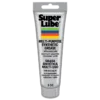 Super Lube 21030 Multi-Purpose Synthetic Grease with Syncolon, 3 oz Tube Original price was: $13.99.$12.39Current price is: $12.39.
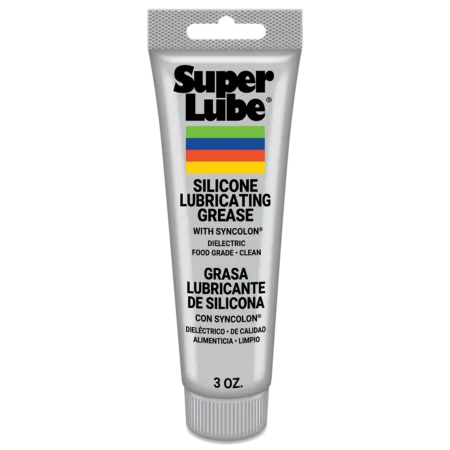
 Super Lube 92003 Silicone Lubricating Grease with Syncolon, 3 oz Tube Original price was: $17.99.$15.59Current price is: $15.59.
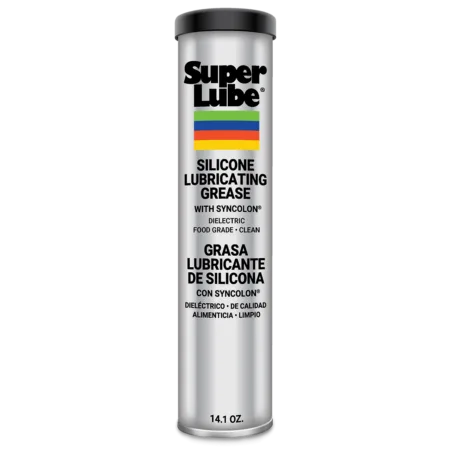
 Super Lube 92150 Silicone Lubricating Grease with Syncolon, 14.1 oz Cartridge Original price was: $25.99.$21.99Current price is: $21.99.
For any high temperature food grade lubricant, grease or oil, the two ratings come from different places. NSF H1 means a lubricant is acceptable where incidental food contact can occur; it is not a performance rating. The temperature range comes from the manufacturer’s data sheet.
Temperature range, dropping point and base oil
- Temperature range is what the manufacturer rates the product for. Super Lube prints one range for its greases. For its Multi-Use Synthetic Oil it prints two: continuous -45°F to 450°F (-43°C to 232°C) and intermittent -50°F to 500°F (-45°C to 260°C). Intermittent covers short excursions, not normal running.
- Dropping point is a lab result (ASTM D2265 for Super Lube’s synthetic grease): the temperature at which a grease turns fluid enough to drip. It is not a working limit. The synthetic grease’s dropping point is above 550°F (287°C), but the grease is rated to 450°F, so plan to 450°F. Super Lube publishes no dropping point for its silicone greases; their data sheets list the melting point as “No Melt.”
- Base oil is the fluid that does the lubricating. The synthetic grease uses synthetic base fluids with Syncolon, Super Lube’s PTFE micro-powder, and contains no silicone. The Silicone Lubricating Grease uses a 5,000 cSt silicone base oil, also with Syncolon, and Super Lube rates it compatible with the majority of rubber and plastic compounds.
Where high temperatures come up in food plants
Heat rarely means the grease sits inside the oven. It means a lubricated part running close to a heat source: conveyor bearings, chains and guides on ovens and cooking lines; hinges, valves and door seals on sterilizers and retorts, where heat comes with steam and washdown; fan and drum bearings on dryers; cams and slides on conveyors next to hot equipment.
What counts is the temperature of the lubricated part, not the oven setpoint. Check it at the bearing housing or chain where you can, follow the equipment maker’s lubricant specification, and choose a product whose published range covers that temperature with room to spare.
NSF H1 lubricants we carry, by temperature range
Values are from Super Lube’s technical data sheets and NSF registrations. Every product listed is NSF H1 registered.
| Super Lube product (part nos.) | Type | Published temperature range | Dropping point | NSF reg. no. |
|---|---|---|---|---|
| Multi-Purpose Synthetic Grease with Syncolon (21030, 21010, 21036, 41150, 41160) | PTFE synthetic grease, NLGI 2, no silicone | -45°F to 450°F (-43°C to 232°C) | Above 550°F (287°C) | 096790 |
| Silicone Lubricating Grease with Syncolon (92003, 92150, 92016) | Silicone grease with PTFE, NLGI 2 | -40°F to 500°F (-40°C to 260°C) | Not published (“No Melt”) | 141974 (H1 and HT1) |
| Silicone Dielectric and Vacuum Grease (91003); O-Ring Silicone Grease (93016) | Silicone grease, NLGI 2 | -40°F to 500°F (-40°C to 260°C) | Not published (“No Melt”) | 141973; 156444 |
| Multi-Use Synthetic Oil with Syncolon (51004, 51010, 51600) | ISO 100 synthetic oil with PTFE | Continuous -45°F to 450°F (-43°C to 232°C); intermittent -50°F to 500°F (-45°C to 260°C) | Not applicable (oil) | 136742 |
| Synthetic Lightweight Oil (52004) | ISO 68 synthetic oil | Continuous -40°F to 500°F (-40°C to 260°C) | Not applicable (oil) | 136306 |
| Silicone Oil (56104, 56504); O-Ring Silicone Lubricant (56204) | Silicone fluid | -58°F to 392°F (-50°C to 200°C) | Not applicable (fluid) | 151067; 156449 |
Nothing here carries a published rating above 500°F (260°C), and the silicone fluids stop at 392°F (200°C): a food grade silicone is not automatically a high-temperature one.
For the rest of our range, including products that are not food grade, see the lubricant temperature chart.
There is no NSF category for high-temperature grease. HT1, which turns up in the same searches, is NSF’s category for heat transfer fluids where incidental food contact is possible. NSF registers the silicone lubricating grease as both H1 and HT1 (#141974), but for a bearing or a seal the registration to look for is H1. Our guide to what NSF H1 means covers every category and how to verify a registration number.
PTFE synthetic grease or silicone grease?
PTFE synthetic grease for loaded metal parts. Super Lube lists plain, anti-friction, ball, roller and wheel bearings, cams, slides, valves, conveyors and chains for its Multi-Purpose Synthetic Grease. It is compatible with most other greases and contains no silicone, so it is safe around paint spraying and finishing. Buy the 3 oz tube or a 3-pack; the 14.1 oz cartridge (41150) and canister (41160) hold the same grease.
Silicone grease for rubber, plastic and seals, or a plain bearing that runs above 450°F but within 500°F. Super Lube lists bushings, sleeves and plain bearings, sealing rings and rubber parts, plastic parts and gears, and food processing equipment, but not ball, roller or wheel bearings or chains. For chains, the 51004 oil lists chains and conveyors. If a loaded rolling bearing runs above 450°F, neither grease is an obvious fit; ask the equipment maker or Super Lube. Choose the 92003 3 oz tube, a 3-pack or the 92150 14.1 oz cartridge. For a wider comparison, read Super Lube 21030 vs 92003.
Limits to respect
- The published top is the ceiling. A higher dropping point is not extra headroom, and above 500°F (260°C) none of the products above is rated.
- Continuous versus peaks. Where Super Lube prints one range, as for the greases, it does not say how long the product can sit at the top. Keep normal running temperatures below it and ask Super Lube about parts that live near the limit.
- No pure oxygen. Super Lube says the Multi-Purpose Synthetic Grease is not for use in a pure oxygen environment. The silicone grease data sheet does not address oxygen service, so ask the manufacturer before assuming it is suitable.
- Over-greasing makes heat. Super Lube warns not to over-grease bearings, because excessive heating may result, and recommends running your own trials to confirm a product suits your process.
Good habits on hot food equipment
- Lock out the equipment and let it cool before servicing.
- Clean and dry the lube point, and wipe grease fittings clean before pumping, as Super Lube directs.
- Purge the old grease, as Super Lube recommends, so no non-H1 grease stays mixed in. Never mix 93016 O-ring grease with other greases.
- Apply only what the part needs and wipe off excess near the product zone. H1 assumes the minimum amount that does the job.
- Monitor hot points to set a maintenance schedule, and periodically clean and repack bearings with fresh grease.
- Record the product and its NSF registration number in your lubrication schedule or food safety plan.
Frequently asked questions
What is the highest temperature food grade grease you carry?
Super Lube’s silicone greases. 92003, 92150, 92016, 91003 and 93016 are NSF H1 registered and rated -40°F to 500°F (-40°C to 260°C).
Is there an NSF rating for high temperature grease?
No. NSF H1 covers incidental food contact, not temperature performance. Check the H1 registration number and, separately, the range on the manufacturer’s data sheet.
Is silicone grease better than PTFE grease for high heat?
Its published range goes higher, to 500°F against 450°F, but Super Lube lists it for seals, rubber and plastic parts and plain bearings rather than rolling bearings and chains. Choose by the part first, then check the range.
Can I run a grease up to its dropping point?
No. Dropping point is a lab test, not an operating limit. Super Lube’s synthetic grease has a dropping point above 550°F (287°C) but is rated only to 450°F (232°C).
Can food grade grease be used on oven equipment?
Yes, on parts whose actual temperature stays inside the published range. Measure the part rather than reading the oven setting, and follow the oven maker’s lubricant specification.
Bottom line
Pick an NSF H1 grease whose published range covers the part’s real temperature, not the oven setting. Among the H1 greases we carry, that means the PTFE synthetic grease (21030 family, to 450°F) for bearings, cams, slides and chains, and the silicone grease (92003, 92150, 92016, to 500°F) for seals, rubber, plastic and plain bearings. Treat the top of the range as a ceiling and keep the synthetic grease out of pure oxygen. Browse all food grade greases and NSF H1 lubricants, or download data sheets from our technical documents page.
Products in this guide
-
Super Lube
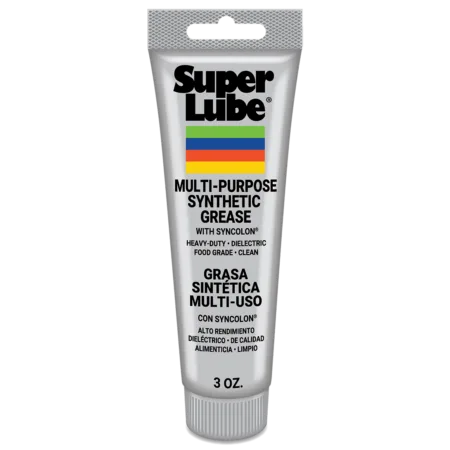
Super Lube 21030 Multi-Purpose Synthetic Grease with Syncolon, 3 oz Tube
Original price was: $13.99.$12.39Current price is: $12.39.In stock — ships in 1–2 days
- NSF H1 food grade
- Dielectric
-
Super Lube
Super Lube 92003 Silicone Lubricating Grease with Syncolon, 3 oz Tube
Original price was: $17.99.$15.59Current price is: $15.59.In stock — ships in 1–2 days
- NSF H1 food grade
- Dielectric
-
Super Lube
Super Lube 92150 Silicone Lubricating Grease with Syncolon, 14.1 oz Cartridge
Original price was: $25.99.$21.99Current price is: $21.99.In stock — ships in 1–2 days
- NSF H1 food grade
- Dielectric
-
Super Lube
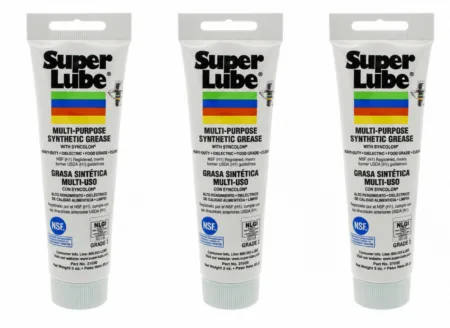
Super Lube 21030 Multi-Purpose Synthetic Grease with Syncolon, 3 oz Tube (Pack of 3)
Original price was: $30.99.$25.99Current price is: $25.99.$8.66 / tube
In stock — ships in 1–2 days
- NSF H1 food grade
- Dielectric
-
Super Lube
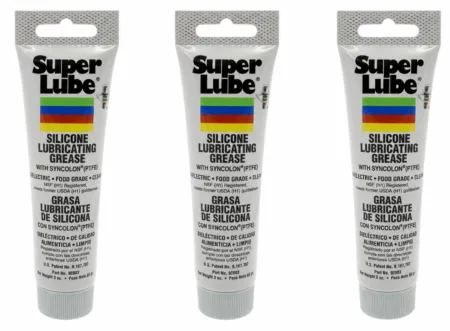
Super Lube 92003 Silicone Lubricating Grease with Syncolon, 3 oz Tube (Pack of 3)
Original price was: $45.99.$41.30Current price is: $41.30.$13.77 / tube
In stock — ships in 1–2 days
- NSF H1 food grade
- Dielectric
-
Super Lube
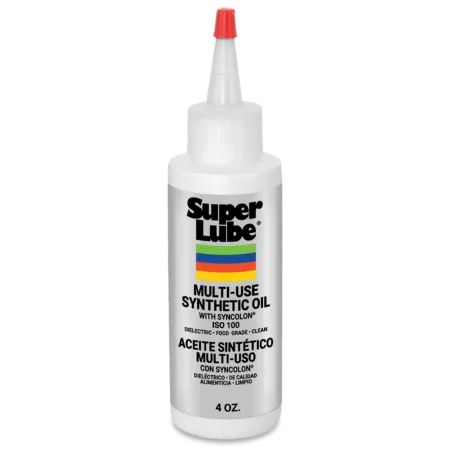
Super Lube 51004 Multi-Purpose Synthetic Oil with Syncolon, 4 oz Bottle
Original price was: $12.99.$11.99Current price is: $11.99.Only 3 left — ships in 1–2 days
- NSF H1 food grade
- Made in USA
Sources
- Kano Laboratories, Super Lube Multi-Purpose Synthetic Grease with Syncolon technical data sheet (August 2024) and product page
- Super Lube Silicone Lubricating Grease with Syncolon technical data sheet (March 2024) and product page
- Super Lube product pages: dielectric and vacuum grease, O-ring silicone grease, Multi-Use Synthetic Oil, Synthetic Lightweight Oil, silicone oil (100 cSt, 5,000 cSt), O-ring silicone lubricant
- NSF registration certificates #096790 (H1) and #141974 (H1 and HT1); NSF White Book listings