
This lubricant temperature chart compares 51 products we carry, from greases, oils and penetrants to DeoxIT contact treatments and ASI silicone sealants, by published temperature range, NSF H1 registration number, base, NLGI grade or viscosity, dielectric strength and rubber and plastic compatibility. Every value comes from the manufacturer’s own technical data sheet (TDS), safety data sheet (SDS) or product page, from Kano Laboratories (Super Lube, Kroil), CAIG Laboratories (DeoxIT) and American Sealants Inc. (ASI). Where a figure isn’t published, the cell shows a dash, not an estimate.
Products in this guide
 Super Lube 21030 Multi-Purpose Synthetic Grease with Syncolon, 3 oz Tube Original price was: $13.99.$12.39Current price is: $12.39.
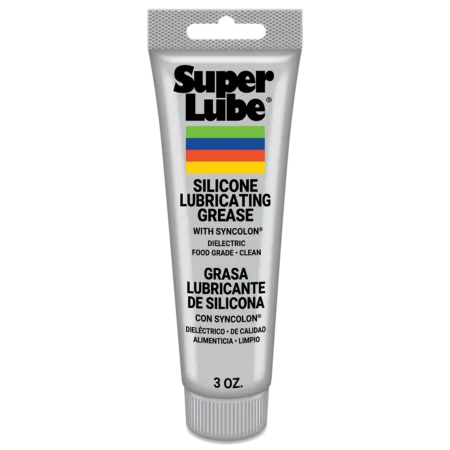
 Super Lube 92003 Silicone Lubricating Grease with Syncolon, 3 oz Tube Original price was: $17.99.$15.59Current price is: $15.59.
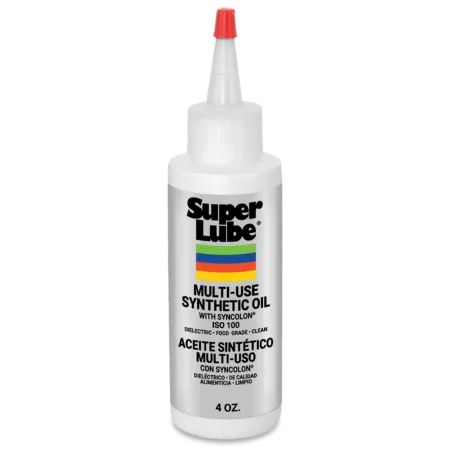
 Super Lube 51004 Multi-Purpose Synthetic Oil with Syncolon, 4 oz Bottle Original price was: $12.99.$11.99Current price is: $11.99.
We compiled the chart in October 2026 from the documents on our technical documents page. Manufacturers revise data sheets, so check the current TDS before you write a value into a specification.
How to read the chart
- Temperature range is shown as the manufacturer prints it, °F first, with °C where provided. Continuous or service temperature is the rating for ongoing use; intermittent is a short excursion the product tolerates, not a working target.
- Application temperature (ASI: -35°F to 150°F) is the range for applying an uncured sealant, not a service limit.
- Flash point and dropping point are lab results, not operating limits: the first is where vapors can ignite, the second where a grease turns fluid enough to drip in a standard test.
- NLGI grade rates grease consistency on a scale from 000 (semi-fluid) to 6 (very firm). Every Super Lube grease here is NLGI 2.
- Viscosity is in centistokes (cSt); higher means thicker. Super Lube measures its synthetic oils at 40°C and its silicone fluids at 25°C, so compare like with like.
- NSF H1 is NSF’s category for lubricants acceptable where incidental food contact can occur; H2 means there must be no possibility of food contact. The numbers are the registrations the manufacturers print on their data sheets or product pages. More in What is NSF H1?
- Dielectric strength is the voltage an insulating film withstands per unit of thickness before it breaks down. Test methods differ (ASTM D149, ASTM D877, CTM 0114), so compare figures measured the same way.
Greases
All five grease families are Super Lube products, and all are NLGI 2. DeoxIT FaderGrease is listed in the DeoxIT table.
| Product (part no.) | Base and NLGI grade | Temperature range | NSF H1 reg. no. | Dielectric strength |
|---|---|---|---|---|
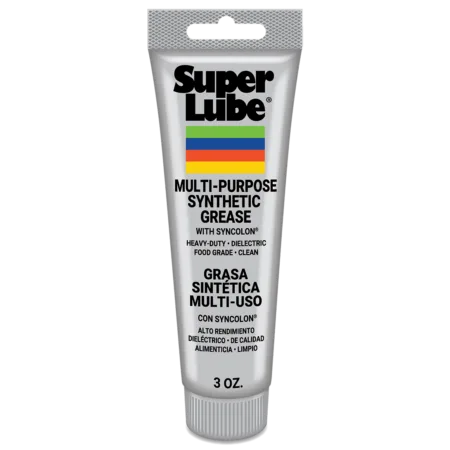
| Super Lube Multi-Purpose Synthetic Grease with Syncolon: 21030 (3 oz tube), 21036 (3 oz cartridge), 41150 (14.1 oz cartridge), 41160 (14.1 oz canister), 21010 (½ oz tube) | Synthetic base fluids with Syncolon (PTFE); no silicone; NLGI 2 | -45°F to 450°F (-43°C to 232°C) | #096790 | 643 V/mil (ASTM D149) |
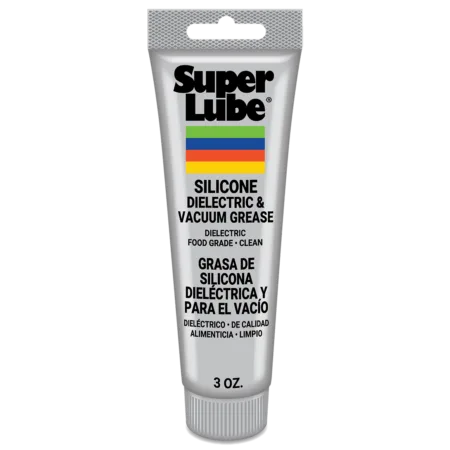
| Super Lube 91003 Silicone Dielectric and Vacuum Grease (3 oz tube) | Non-curing silicone compound, 5,000 cSt base oil; NLGI 2 | -40°F to 500°F (-40°C to 260°C) | #141973 | 777 V/mil (ASTM D149) |
| Super Lube Silicone Lubricating Grease with Syncolon: 92003 (3 oz tube), 92150 (14.1 oz cartridge), 92016 (14.1 oz canister) | Silicone, 5,000 cSt base oil, with Syncolon (PTFE); NLGI 2 | -40°F to 500°F (-40°C to 260°C) | #141974 | 400 V/mil (CTM 0114) |
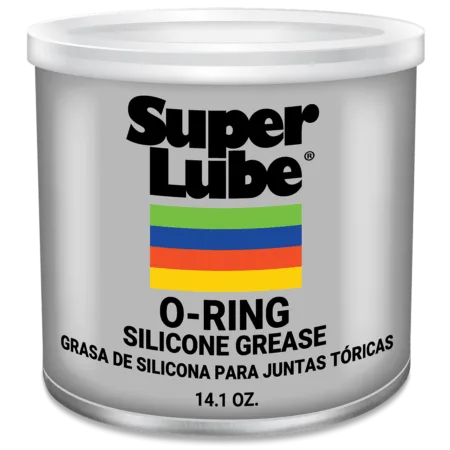
| Super Lube 93016 O-Ring Silicone Grease (14.1 oz canister) | Silicone, 5,000 cSt base oil; NLGI 2 | -40°F to 500°F (-40°C to 260°C) | #156444 | 400 V/mil (CTM 0114) |
| Super Lube 97008 Silicone Brake Grease with Syncolon (8 oz tube) | Silicone, 5,000 cSt base oil, with Syncolon; NLGI 2 | -40°F to 500°F (-40°C to 260°C) | — | 400 V/mil (CTM 0114) |
— = not stated on the manufacturer’s data sheet.
Beyond temperature, Super Lube says the synthetic grease contains no silicone, so it is safe around paint spraying and finishing, and lists its dropping point as above 550°F (287°C). It also says not to mix 93016 O-ring grease with other greases. For a head-to-head, read Super Lube 21030 vs 92003, or browse greases and oils.
Oils and spray lubricants
Synthetic oils are graded by ISO viscosity at 40°C; silicone fluids are rated in cSt at 25°C. The three aerosols leave different films: grease (31110), non-drying silicone (91110) and dry PTFE (11016).
| Product (part no.) | Base / type | Viscosity or consistency | Temperature range | NSF H1 reg. no. |
|---|---|---|---|---|
| Super Lube Multi-Use Synthetic Oil with Syncolon: 51004 (4 oz bottle), 51010 (7 mL precision oiler), 51600 (1 quart trigger sprayer) | Synthetic blend with suspended Syncolon (PTFE) particles | ISO 100: 118 cSt @ 40°C, 15 cSt @ 100°C | Continuous -45°F to 450°F (-43°C to 232°C); intermittent -50°F to 500°F (-45°C to 260°C) | #136742 |
| Super Lube 52004 Synthetic Lightweight Oil (4 oz bottle) | Synthetic oil; zinc- and metal-free | ISO 68: 68 cSt @ 40°C, 11 cSt @ 100°C | Continuous -40°F to 500°F (-40°C to 260°C) | #136306 |
| Super Lube 12004 Air Tool Lubricant (4 oz bottle) | Special base fluid with rust and corrosion inhibitors | ISO 68: 65 cSt @ 40°C, 11 cSt @ 100°C | Continuous -40°F to 500°F (-40°C to 260°C); intermittent -40°F to 650°F (-40°C to 343°C) | #127200 |
| Super Lube 56104 Silicone Oil, 100 cSt (4 oz bottle) | Polydimethylsiloxane (PDMS) silicone fluid | 100 cSt @ 25°C | -58°F to 392°F (-50°C to 200°C) | #151067 |
| Super Lube 56504 Silicone Oil, 5,000 cSt (4 oz bottle) | Polydimethylsiloxane (PDMS) silicone fluid | 5,000 cSt @ 25°C | -58°F to 392°F (-50°C to 200°C) | #151067 |
| Super Lube 56204 O-Ring Silicone Lubricant (4 oz bottle) | Non-curing silicone fluid | 5,000 cSt @ 25°C | -58°F to 392°F (-50°C to 200°C) | #156449 |
| Super Lube 31110 Multi-Purpose Synthetic Lubricant (11 oz aerosol) | Synthetic lubricant with Syncolon; grease in aerosol form, non-drying film | NLGI 2 (base) | -45°F to 450°F (-43°C to 232°C) | #125824 |
| Super Lube 91110 Silicone Lubricant (11 oz aerosol) | Silicone base; non-drying film | — | -40°F to 392°F (-40°C to 200°C) | #136589 |
| Super Lube 11016 Dri-Film Lubricant with Syncolon (11 oz aerosol) | Syncolon powder and solvent blend; dries to a white solid film | 5 cSt | -45°F to 500°F (-43°C to 260°C) | #136743 |
— = not stated on the manufacturer’s data sheet.
Super Lube also lists dielectric strengths of 16 kV/mm for the 100 cSt silicone oil and 18 kV/mm for the 5,000 cSt fluids, at 25°C. To choose among the synthetic oils, see our Super Lube oil guide.
Penetrants and precision oils
Kroil publishes safety data sheets rather than technical data sheets for these products, so its penetrants have no published service range. The useful heat figure is the SDS flash point: 132°F (55.5°C) for Kroil Original and Silikroil, which the SDSs class as flammable.
| Product (part no.) | Base | Temperature rating | Flash point | NSF registration |
|---|---|---|---|---|
| Kroil Original Penetrant, liquid: KL081 (8 oz drip bottle), KL011 (1 gal can) | Petroleum-based: severely hydrotreated petroleum distillates (30–50%) and LVP aliphatic hydrocarbon (20–40%) | — | 132°F (55.5°C) TOC | H2 #165745 (not H1) |
| Kroil Original Penetrant, aerosol (AeroKroil): KS102 (10 oz), KS132 (13 oz), KS162 (16.5 oz) | Same petroleum-based penetrant; carbon dioxide propellant (1–5%) | — | 132°F (55.5°C) TOC | — |
| Kroil KS132ST AeroKroil with SprayTech (13 oz aerosol) | — | — | — | — |
| Kroil SK102 Silikroil (10 oz aerosol) | Petroleum-based penetrant with dimethyl silicone | — | 132°F (55.5°C) TOC | — |
| Kroil MC081 Microil Precision Lubricant (8 oz drip can) | Highly refined mineral oil; 28.8 cSt @ 40°C (104°F) | Lubricates to -50°F | 327°F (164°C) COC | — |
| Super Lube 83110 Metal Protectant and Corrosion Inhibitor (11 oz aerosol) | Synthetic penetrating oil; 53–60 cSt @ 40°C | No range stated; pour point -30°F (-34°C) | — | H1 #156447 (aerosol) |
— = not stated on the manufacturer’s data sheet. TOC and COC are open-cup flash point test methods.
Kroil lists KS132ST under Original Penetrant, but its product-specific SDS gives different composition data from the other Original sheets, so we leave those cells blank. Only liquid Kroil carries an NSF listing, and it is H2. Super Lube 83110 is the H1 option in this group, and its data sheet reports a pass after 500 hours of ASTM B117 salt spray. See all penetrating oils.
DeoxIT contact treatments
DeoxIT products treat electrical contacts rather than lubricate machinery. CAIG sorts them by job: D-Series for metal contacts in service or showing oxidation, Gold for plated contacts, and F-Series (Fader) for conductive plastic faders and controls. The 5% sprays carry the active fluid in a solvent that flushes the contact.
| Product (part no.) | Formulation | Temperature range | Dielectric strength | Plastics and rubber (CAIG ratings) |
|---|---|---|---|---|
| DeoxIT D-Series 100% liquid: D100L-2C (2 mL squeeze tube), D100L-2DB (7.4 mL brush), D100L-16BX (1.6 mL mini-brush), D100L-25C (25 mL needle dispenser) | 100% D100L, no solvents; 30.9 cSt @ 40°C; approx. 20% deoxidizing action | -29°F to 400°F (-34°C to 200°C) | 341 V/mil (ASTM D877-13) | Excellent: ABS, nylon, Lexan, phenolic, epoxy, polycarbonate, POM, PP, PTFE, PVC. Good: HDPE, LDPE. Fair (test first): PMMA, PS. Poor: TPE, rubber, varnish |
| DeoxIT D5S-6-LMH (5 oz spray) | 5% D100L, 75% odorless mineral spirits, 20% difluoroethane | -29°F to 400°F (-34°C to 200°C) | — | Safe on most plastics; rubber may swell until the solvent evaporates; test aging ABS first |
| DeoxIT DN5S-6N (5.75 oz spray) | 5% D100L, 75% Solstice PF carrier solvent, 20% propellant; non-flammable | -29°F to 400°F (-34°C to 200°C) | — | Safe on most plastics; will not swell rubber; test aging ABS first |
| DeoxIT Gold G5S-6 (5 oz spray) | 5% DeoxIT Gold G100L, 75% odorless mineral spirits, 20% difluoroethane | -29°F to 400°F (-34°C to 200°C) | — | Safe on most plastics; rubber may swell until the solvent evaporates; test aging ABS first |
| DeoxIT Fader F100L-L25C (25 mL needle dispenser) | 100% F100L, no solvents; 39.1 cSt @ 40°C; not a deoxidizer | -15°F to 302°F (-26°C to 150°C) | 299 V/mil (ASTM D877-13) | Excellent: ABS, nylon, Lexan, HDPE, phenolic, epoxy, polycarbonate, POM, PP, PTFE, PVC. Good: LDPE, PMMA, PS. Fair (test first): TPE, rubber, varnish |
| DeoxIT Fader F5S-H6 (5 oz spray) | 5% F100L, 75% odorless mineral spirits, 20% difluoroethane; not a deoxidizer | -15°F to 302°F (-26°C to 150°C) | — | Safe on plastics; rubber may swell until the solvent evaporates; test aging ABS first |
| DeoxIT FaderGrease DFG-213-8G (8 g syringe) | Silicone grease and additives; penetration 170–225 mm/10 unworked; 0% cleaning action | -15°F to 302°F (-26°C to 150°C) | 325 V/mil (ASTM D149) | Compatible with most plastics and elastomers; TPE, rubber and varnish rated Fair (test first) |
— = not stated on the manufacturer’s data sheet. CAIG’s dielectric figures are for the 100% concentrates and the FaderGrease. Where CAIG’s own documents give two ranges (DFG-213-8G, G5S-6), we show the narrower one.
D5S-6, G5S-6 and F5S-H6 are extremely flammable aerosols; DN5S-6N is non-flammable. CAIG says the F-Series is not for metal contacts or connectors. For noisy controls, see how to fix scratchy pots, or browse all contact cleaners.
ASI silicone sealants
Sealants aren’t lubricants, but they get compared on the same questions. ASI gives a service range for the cured rubber, an intermittent peak of 450°F and an application range of -35°F to 150°F, all in °F only.
| Product | Cure type and hardness | Service temperature | Listings | Cautions |
|---|---|---|---|---|
| ASI 388 Electronic Grade Silicone, clear: 2.8 oz squeeze tube, 10.2 oz cartridge | Neutral cure (oxime); 30 Shore A; dielectric strength 500 V/mil (ASTM D149) | -70°F to 400°F; intermittent up to 450°F | UL Recognized (File E209770); meets MIL 46106B Type 1 | Can discolor copper around the applied or confined area; test all substrates |
| ASI 502 RTV Silicone Sealant: clear 2.8 oz tube, white 2.8 oz tube, black 2.8 oz tube, clear 10.2 oz cartridge | Acetoxy cure; 25 Shore A | -70°F to 400°F; intermittent up to 450°F | NSF Standard 51 (sealant on surfaces with incidental food contact); FDA 21 CFR 177.2600; UL Recognized (File E209770); MIL 46106B Type 1; ASTM C920 Class 25 | Corrosive to sensitive metals when confined; not for porous surfaces such as concrete, mortar or brick; not paintable |
| ASI 509 Aquarium Silicone Sealant: clear 10.2 oz cartridge, black 10.2 oz cartridge | Acetoxy cure; 45 Shore A | -50°F to 400°F; intermittent up to 450°F | FDA 21 CFR 177.2600; for saltwater and freshwater aquariums | Wait for full cure (7 days) before using the aquarium; not for porous surfaces; not paintable |
Cure chemistry matters more than temperature here. ASI 502 and 509 are acetoxy silicones, with an acetic acid (vinegar) odor while curing, and ASI notes that acetoxy cure can be corrosive to sensitive metals when confined. ASI positions the neutral-cure 388 for electronics, yet says it can discolor copper, so test first. For aquariums, wait the full 7-day cure; see how long aquarium silicone takes to cure, or shop sealants and silicones.
Connector gel and heat sink compound
These two Super Lube products often get confused with dielectric grease, and neither is a lubricant. The gel protects terminals and connections; the compound carries heat into a heat sink, a job an insulating grease such as 91003 isn’t made for.
| Product (part no.) | What it is | Temperature range | Electrical / thermal data | Note |
|---|---|---|---|---|
| Super Lube 82003 Anti-Corrosion and Connector Gel (3 oz tube) | High molecular weight connector gel, translucent amber; NLGI 0 | -45°F to 500°F (-43°C to 260°C) | — | Super Lube: should not be used as a lubricant |
| Super Lube 98003 Heat Sink Compound (3 oz tube) | Paste blended with thermally conductive fine metal oxide powders; will not harden, dry out or melt | -40°F to 500°F (-40°C to 260°C) | Thermal conductivity 2.174 W/m·K; dielectric constant 4.93 | For heat transfer, not a substitute for dielectric grease |
— = not stated on the manufacturer’s data sheet.
More in heat sink compound vs thermal paste.
Rubber, plastic and paint compatibility
What each manufacturer says about materials for the greases, oils and penetrants above; DeoxIT and ASI ratings are in their own tables. This is the manufacturer’s wording, not our test, so try seals and stressed plastics on a sample part first.
| Product (part no.) | Rubber | Plastics | Other surfaces and notes |
|---|---|---|---|
| Super Lube Multi-Purpose Synthetic Grease (21030 and the other sizes above) | — | — | Contains no silicone, so safe around paint spraying and finishing operations; compatible with most other greases |
| Super Lube silicone greases: 91003, 92003 (all sizes), 97008 | Majority of rubber compounds | Majority of plastic compounds | 97008: safe for caliper seals |
| Super Lube 93016 O-Ring Silicone Grease and 56204 O-Ring Silicone Lubricant | Excellent: EPDM, nitrile (NBR), Viton/FKM, neoprene, natural rubber, butyl, SBR. Not compatible: silicone rubber (VMQ, MQ, FMQ, PMQ, VMFQ) | Excellent: ABS, nylon (PA), polycarbonate, PE, PET/PBT, PP, PS, PTFE, PUR, PVC, TPE. Good: POM (Delrin), PPS | 93016: do not mix with other greases |
| Super Lube silicone oils 56104 and 56504 | Lubricates a wide range of rubber parts | Lubricates a wide range of plastic parts | — |
| Super Lube Multi-Use Synthetic Oil (51004, 51010, 51600) | Most rubbers | Plastic | Metal, wood, leather and painted surfaces |
| Super Lube 11016 Dri-Film | Rubber | Most plastics not under stress | Wood, paper, glass, fabric, leather, vinyl and metal |
| Super Lube 91110 Silicone Lubricant | Safe on rubber | Use caution | May affect painted or lacquered finishes |
| Super Lube 83110 Metal Protectant | — | — | Steel, aluminum and other metal surfaces |
| Super Lube 52004, 12004 and 31110 | — | — | — |
| Kroil Original Penetrant (KL081, KL011, KS102, KS132, KS162) | Prolonged contact with certain rubber compounds may cause softening or swelling | Generally safe on most plastics when used as directed; same caution for prolonged contact | Steel, iron, aluminum, brass, copper and most metal alloys; generally safe on most painted surfaces; may lift an already-damaged blued gun finish |
| Kroil KS132ST | — | — | Will not attack or damage metal (Kroil, for its penetrants) |
| Kroil SK102 Silikroil | Recommended by Kroil as an alternative to Original Penetrant for rubber seals | Recommended by Kroil as an alternative for plastic components | Will not attack or damage metal |
| Kroil MC081 Microil | — | — | Non-corrosive; will not damage materials (Kroil) |
— = not stated on the manufacturer’s data sheet.
How to choose
1. Temperature
Match the continuous or service range, not the intermittent peak, to the hottest and coldest the part sees in normal use. Among the greases, the Super Lube silicone greases go highest, to 500°F (260°C), and the synthetic grease lowest, to -45°F (-43°C). Among the oils, the silicone fluids go lowest, to -58°F (-50°C).
2. Materials
Check rubber first. Super Lube rates its silicone O-ring products not compatible with silicone rubber, Kroil warns of softening or swelling after prolonged contact, and the solvent in DeoxIT’s flammable sprays may swell rubber until it evaporates. See what grease to use on O-rings and our O-ring lubricant page. Near paint booths, use the silicone-free synthetic grease.
3. Food contact
Look for an NSF H1 registration number, not just the words “food grade.” Every Super Lube product here has one except 97008, 82003 and 98003. Liquid Kroil is H2, and ASI 502’s NSF Standard 51 listing covers a sealant, not a lubricant. Shop food grade grease and NSF H1 lubricants.
4. Electrical work
Decide whether the job is to insulate, to clean or to move heat. Use a dielectric grease such as 91003 (777 V/mil) to seal a connection (see where to put dielectric grease and our dielectric grease page), DeoxIT D-Series to restore oxidized metal contacts, F-Series for conductive plastic faders, and 98003 to move heat.
Frequently asked questions
What temperature can silicone grease handle?
Super Lube rates its silicone greases (91003, 92003, 93016 and 97008) at -40°F to 500°F (-40°C to 260°C). Its silicone oils and O-ring silicone lubricant are rated -58°F to 392°F (-50°C to 200°C).
What does NLGI 2 mean?
It’s a consistency grade on the NLGI scale, which runs from 000 (semi-fluid) to 6 (very firm). Every Super Lube grease in this chart is NLGI 2; the 82003 connector gel is a softer NLGI 0.
Is silicone grease safe on rubber and plastic?
Generally yes, except on silicone rubber. Super Lube rates its O-ring silicone grease and lubricant Excellent on EPDM, nitrile, Viton/FKM and most common plastics, but not compatible with silicone rubber.
What’s the difference between continuous and intermittent temperature?
Continuous (or service) temperature is the rating for ongoing use; intermittent is a short excursion. Super Lube 12004 Air Tool Lubricant, for example, is rated continuous to 500°F (260°C) and intermittent to 650°F (343°C).
Is DeoxIT safe on plastic?
Mostly. CAIG rates its 100% D-Series liquid Excellent on ABS, nylon, polycarbonate and PVC but Poor on TPE, rubber and varnish, and warns that acrylic, ABS and polycarbonate under stress may craze, so test first.
Bottom line
Read the continuous or service range first, then the material, food and electrical columns, and treat a dash as unknown, not as a pass. Current data sheets are on our technical documents page, and the full range is in greases and oils.
Products in this guide
-
Super Lube
Super Lube 21030 Multi-Purpose Synthetic Grease with Syncolon, 3 oz Tube
Original price was: $13.99.$12.39Current price is: $12.39.In stock — ships in 1–3 days
- NSF H1 food grade
- Dielectric
-
Super Lube
Super Lube 92003 Silicone Lubricating Grease with Syncolon, 3 oz Tube
Original price was: $17.99.$15.59Current price is: $15.59.In stock — ships in 1–3 days
- NSF H1 food grade
- Dielectric
-
Super Lube
Super Lube 91003 Silicone Dielectric & Vacuum Grease, 3 oz Tube
$15.99Out of stock
- NSF H1 food grade
- Dielectric
-
Super Lube
Super Lube 93016 O-Ring Silicone Grease, 14.1 oz Canister
Original price was: $30.99.$26.99Current price is: $26.99.Out of stock
- NSF H1 food grade
- Dielectric
-
Super Lube
Super Lube 51004 Multi-Purpose Synthetic Oil with Syncolon, 4 oz Bottle
Original price was: $12.99.$11.99Current price is: $11.99.Only 3 left — ships in 1–3 days
- NSF H1 food grade
- Made in USA
-
DeoxIT
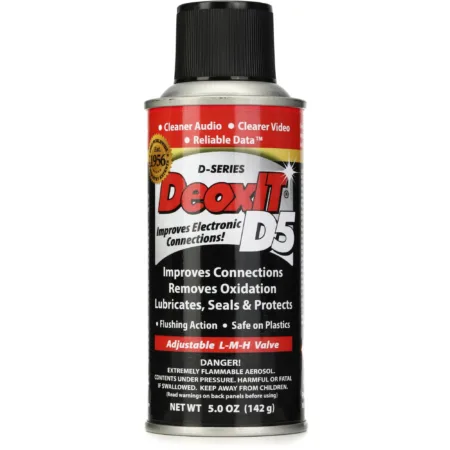
DeoxIT D5S-6 Contact Cleaner Spray with L-M-H Valve, 5 oz
Original price was: $20.99.$19.30Current price is: $19.30.In stock — ships in 1–3 days
- Ground ship only
Sources
- Kano Laboratories, Super Lube technical data sheets for every Super Lube product in this chart: FACTOVAL technical documents page
- Super Lube product pages: Multi-Purpose Synthetic Grease, Silicone Dielectric and Vacuum Grease, Silicone Lubricating Grease, O-Ring Silicone Grease, Silicone Brake Grease, Multi-Use Synthetic Oil, Synthetic Lightweight Oil, Air Tool Lubricant, Silicone Oil 100 cSt, Silicone Oil 5,000 cSt, O-Ring Silicone Lubricant, Multi-Purpose Synthetic Lubricant aerosol, Silicone Lubricant aerosol, Dri-Film aerosol, Metal Protectant and Corrosion Inhibitor, Anti-Corrosion and Connector Gel, Heat Sink Thermally Conductive Compound
- Super Lube safety data sheets: Dri-Film aerosol, Multi-Purpose aerosol, Silicone aerosol, Metal Protectant aerosol, Heat Sink Compound
- Kano Laboratories, Kroil product pages and safety data sheets: Kroil Original Penetrant, liquid Kroil SDS, AeroKroil SDS, AeroKroil with SprayTech SDS, Silikroil, Silikroil SDS, Microil, Microil SDS
- CAIG Laboratories, DeoxIT product pages (each links its data sheet and SDS): D100L-2C, D100L-2DB, D100L-16BX, D100L-25C, D5S-6-LMH, DN5S-6N, G5S-6, F100L-L25C, F5S-H6, DFG-213-8G
- American Sealants Inc. (Meridian Adhesives Group) technical data sheets: ASI 388, ASI 502, ASI 509 Aquarium Sealant, acetoxy vs neutral cure chart
- NSF White Book, Nonfood Compounds listings (to verify a registration number): nsfwhitebook.org